A guide to
Nicolas de Grigny
Reims 1672 — Reims 1703
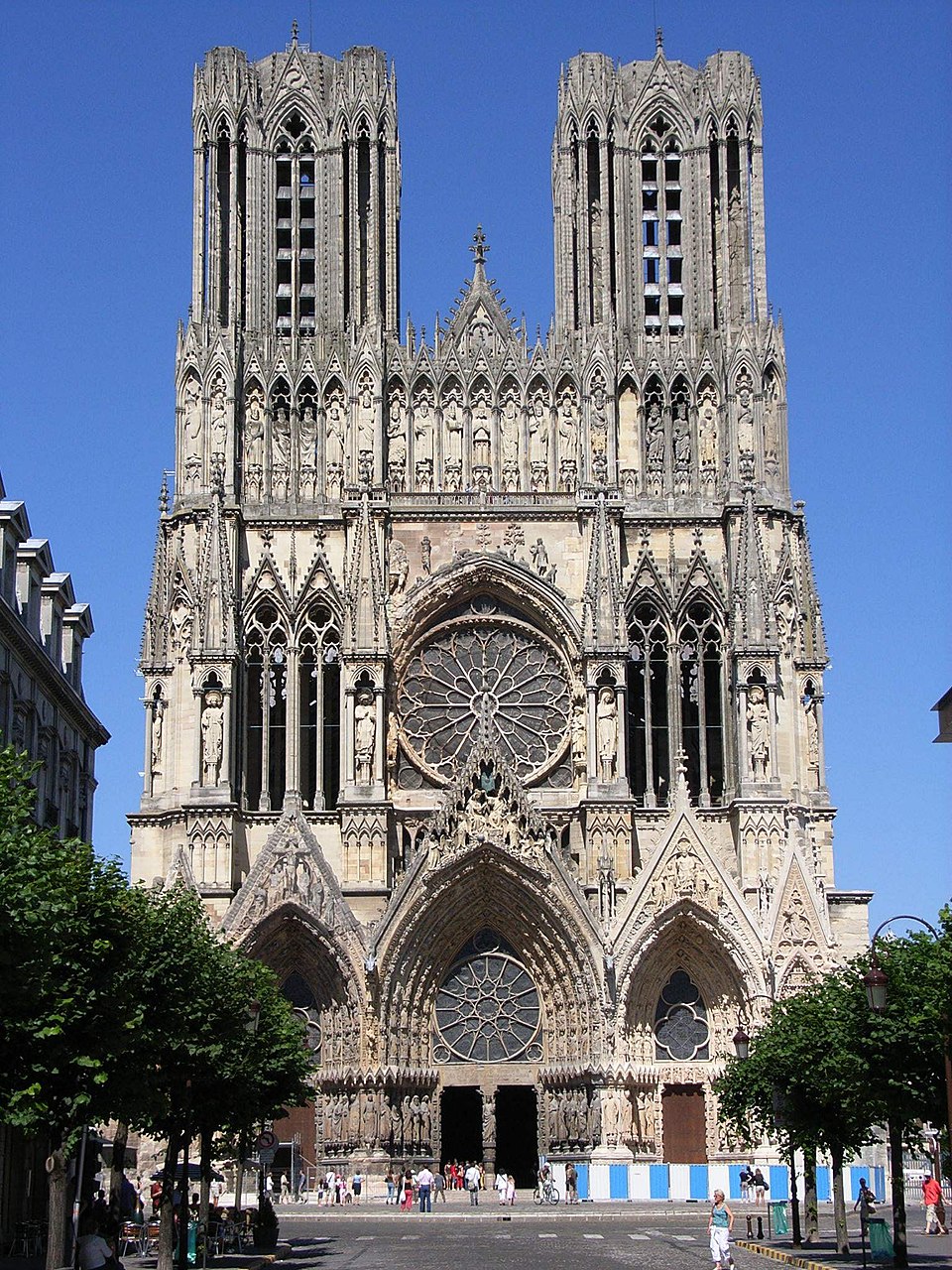
Nicolas de Grigny lived barely thirty-one years and published a single book, and that book is, by wide agreement, the summit of the entire French Baroque organ school. No portrait of him survives, no contemporary anecdote, scarcely a fact beyond the bare dates of a provincial church career. What survives is the music — and the most telling tribute any composer ever received: that Johann Sebastian Bach thought it worth copying out, note by note, in his own hand.
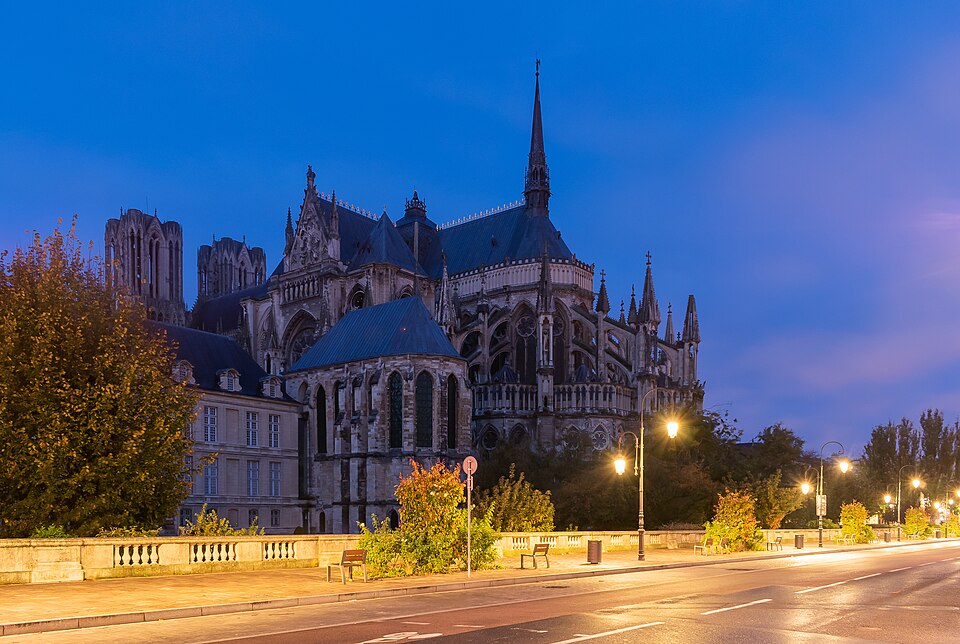
Grigny was baptised in Reims on 8 September 1672, into a family of organists who had held the lofts of the city’s churches for two generations — his father, grandfather, and an uncle all played the organ in Reims. Around 1693 the young man went to Paris, where he served as organist of the great abbey church of Saint-Denis, the burial place of the kings of France; there, by tradition, he studied with the famous Nicolas Lebègue. He married in Paris in 1695, then returned home, and by about 1697 had taken the post that defined him: titular organist of Reims Cathedral, the coronation church of France.
The one great book
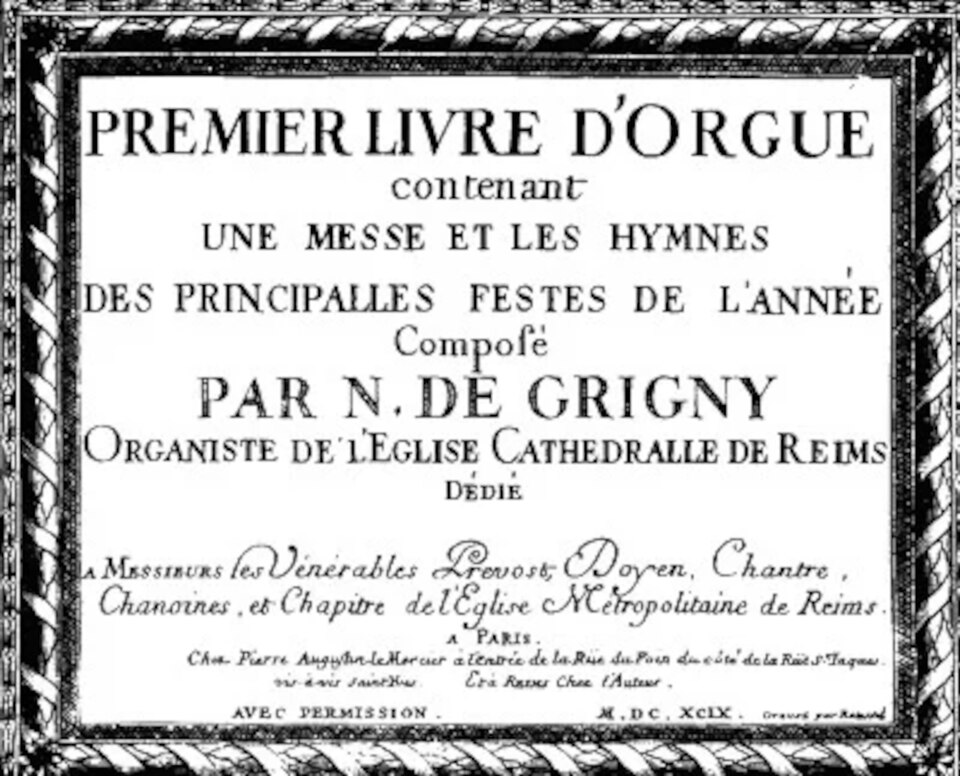
In 1699 Grigny published his Premier livre d’orgue, its title page promising “a Mass and the hymns for the principal feasts of the year.” It contains forty-two pieces: a complete organ Mass and five hymn cycles — Veni Creator, Pange lingua, Verbum supernum, Ave maris stella, and A solis ortus — built to alternate, verset by verset, with the sung plainchant of the cathedral choir.
What sets it apart is its sheer density and depth. Where many of his French contemporaries wrote elegant, dance-touched organ pieces, Grigny wrote with a contrapuntal richness closer to the German masters: massive five-voice pleins jeux, and above all the récits de tierce en taille, in which a long, ornate solo melody sings out from the middle of the texture, accompanied above and below. Listen for that inner voice — the most characteristic and the most moving sound in all French Baroque organ music. The 1699 print was so riddled with engraving errors that his widow reissued a corrected edition in 1711; even flawed, its quality was unmistakable.
Bach’s copy
The most famous fact about Grigny belongs to his afterlife. In 1713, during his Weimar years, the young Johann Sebastian Bach sat down and copied out Grigny’s entire Livre d’orgue by hand — a labour he reserved for music he wished to absorb completely. Bach’s manuscript survives, and so does another made by his cousin and friend Johann Gottfried Walther. It is no exaggeration to say that these two German copies are why Grigny’s music came down to us intact: when modern editors prepare the Livre d’orgue, they correct the faulty French print against the readings of Bach and Walther. The greatest of all organist-composers preserved the work of one of the least documented.
Grigny died in Reims on 30 November 1703, only thirty-one years old. He left a single book — and that book, recognised by Bach as a thing worth memorising, has been recognised ever since as the high point of the French Classical organ. A career almost without biography, and a masterpiece nearly complete.