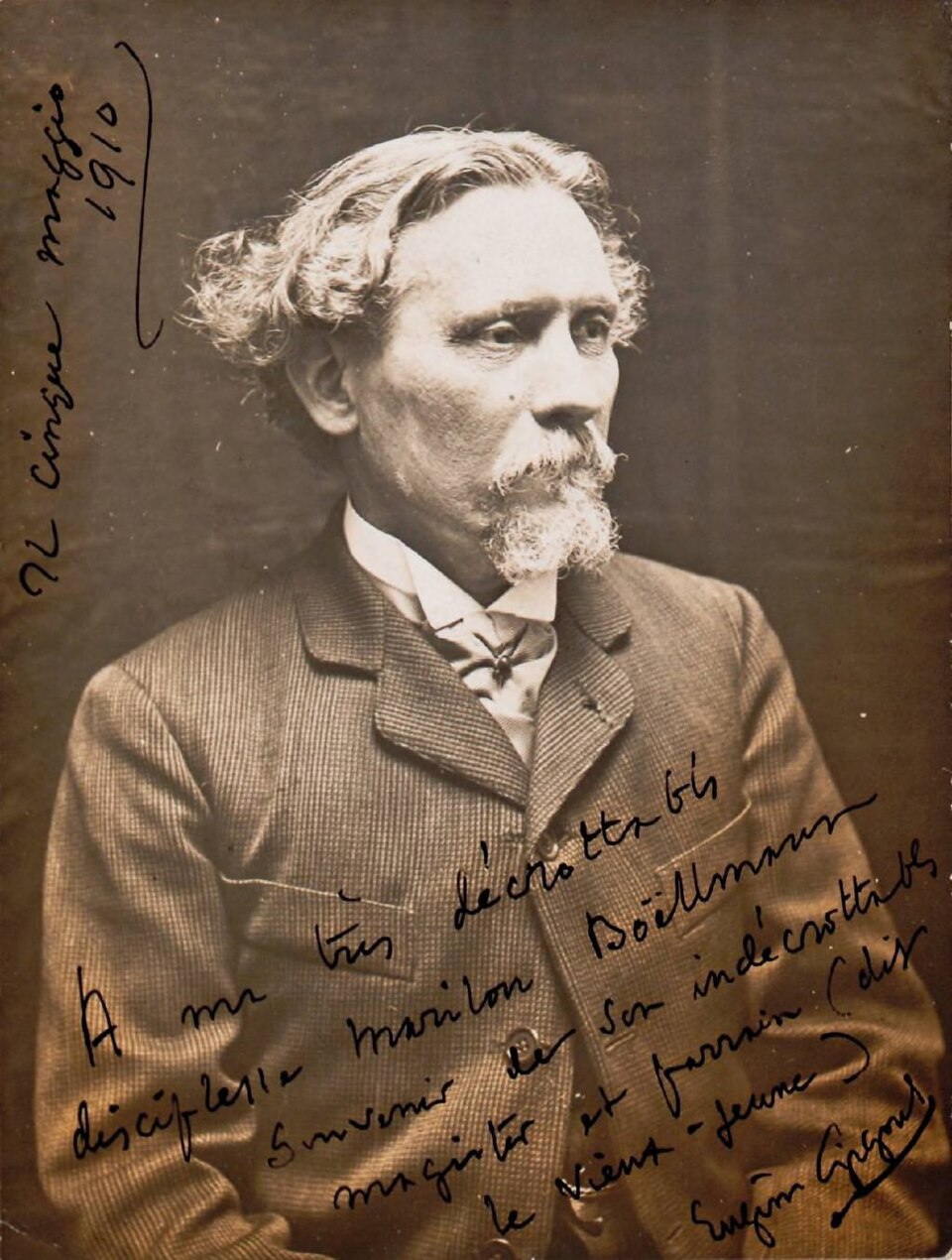
A guide to
Eugène Gigout
Nancy 1844 — Paris 1925
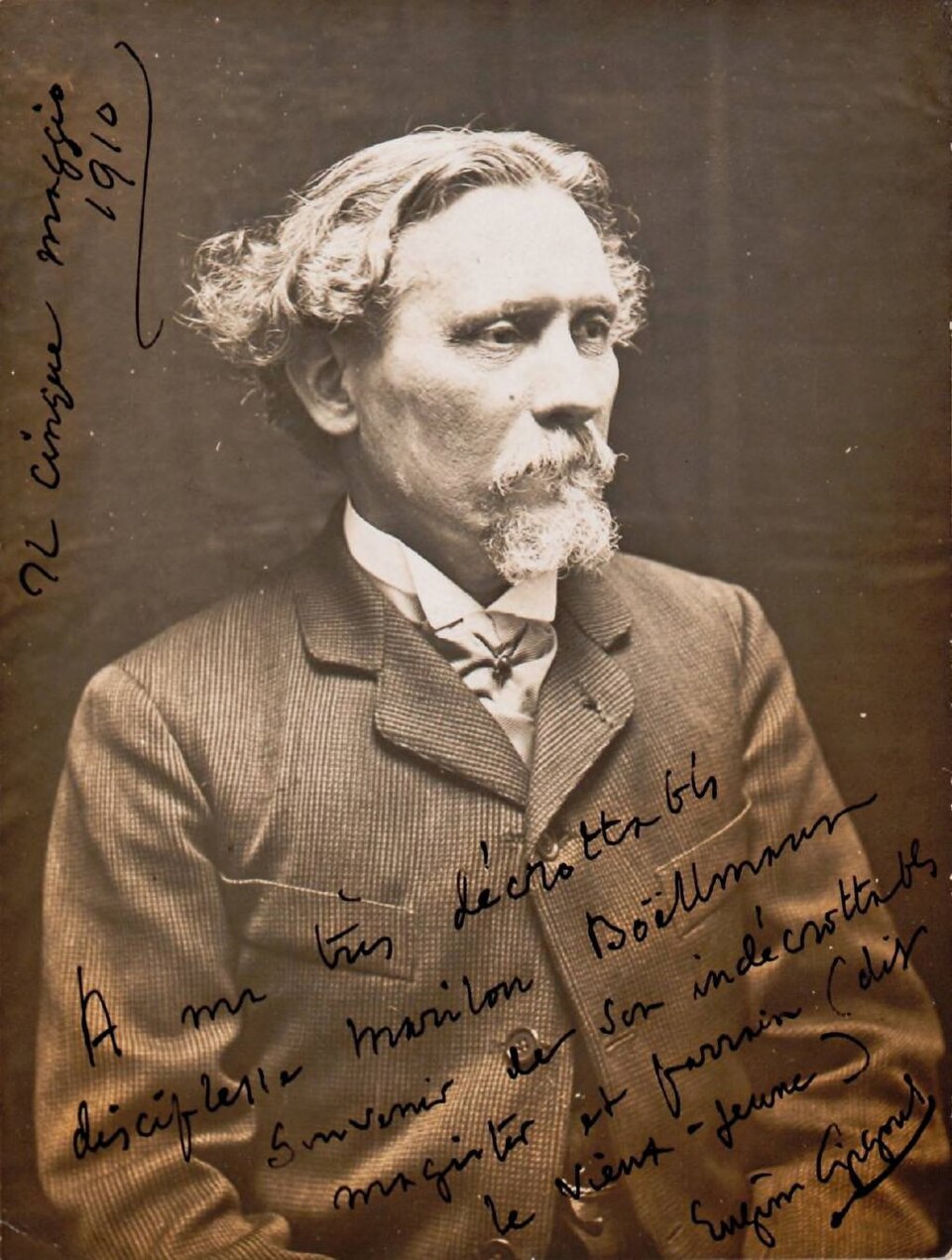
Eugène Gigout belongs to that small company of organists remembered, a little unfairly, for a single piece — in his case the dazzling Toccata in B minor, a recital encore so familiar that it has half eclipsed the long, dignified career behind it. For sixty-two years he was organist of the church of Saint-Augustin in Paris, a tenure of almost unimaginable length; he was a renowned improviser, the founder of his own school, and at the very end of his life the professor of organ at the Conservatoire. He was also, by marriage, the uncle and lifelong protector of Léon Boëllmann — another French organist known above all for one indestructible toccata.
He was born in Nancy on 23 March 1844, and his formation was the École Niedermeyer in Paris, the school dedicated to plainchant, Renaissance polyphony and the serious traditions of church music. There he absorbed a clean, articulate keyboard style and a deep grounding in chant — and there he came under the influence of Camille Saint-Saëns, whose pupil he was proud to call himself. The training shows in everything he wrote: even the showpieces are built on a fastidious, transparent technique.
Sixty-two years at Saint-Augustin
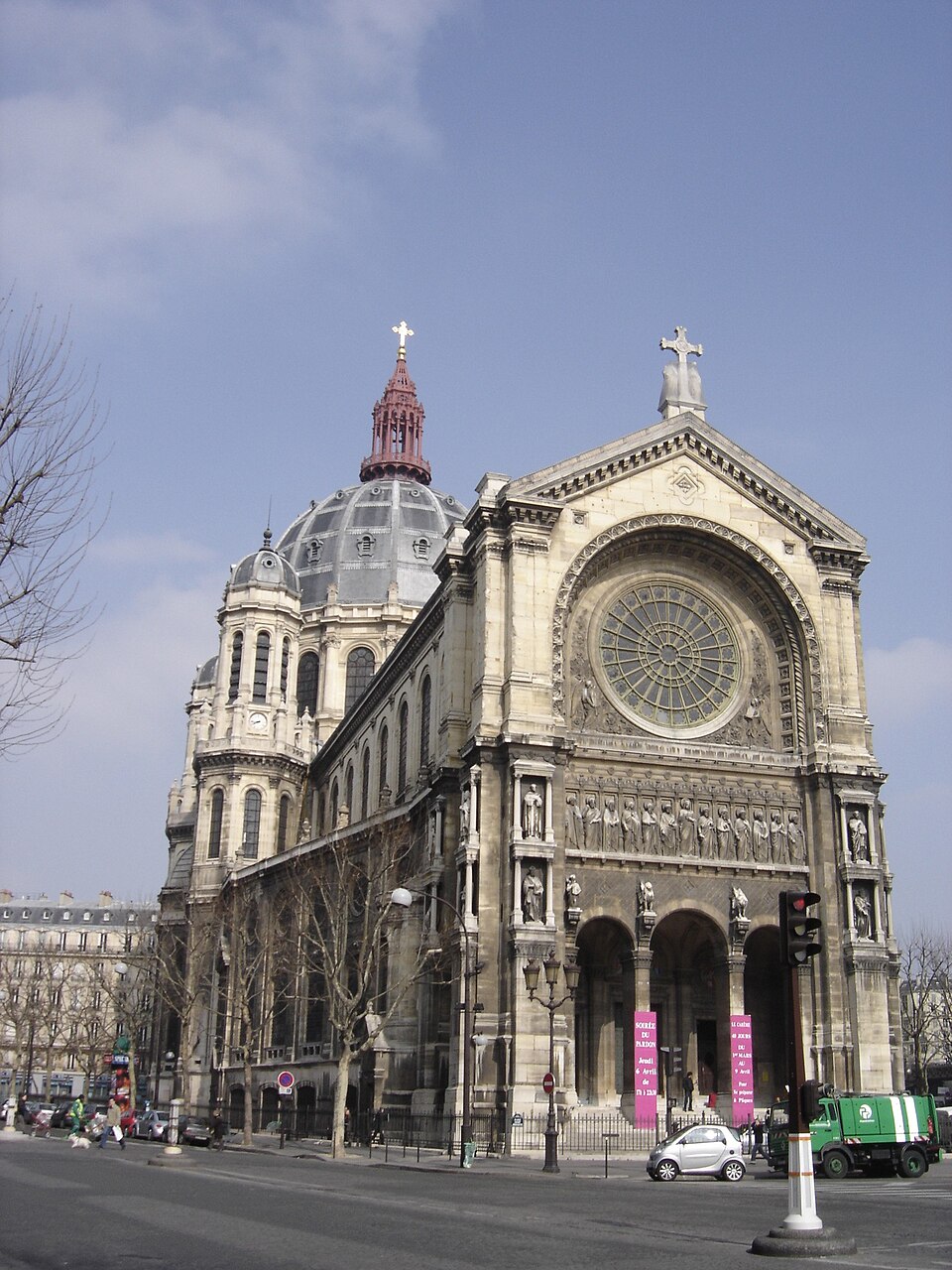
In 1863, at the age of nineteen, Gigout was appointed organiste titulaire of Saint-Augustin — the great domed church in the 8th arrondissement, then almost new — and he held the post until his death in 1925. Sixty-two years at a single console is a record that puts even the long French tenures of the period in the shade. From that loft he built a reputation across Europe as one of the supreme improvisers of his generation, a player who could spin whole symphonic movements out of a given theme.
In 1885 he founded his own school for the teaching of organ, plainchant and improvisation, modelled on the Niedermeyer principles he had grown up with. It became a private academy of the French organ tradition, and through it passed a striking roll of pupils — among them André Marchal, André Fleury, the future opera composer André Messager, and the symphonist Albert Roussel. He also took into his own household, and raised as family, the orphaned children of Boëllmann, who had married Gigout’s niece and lived under his roof.
The Toccata and the concert pieces
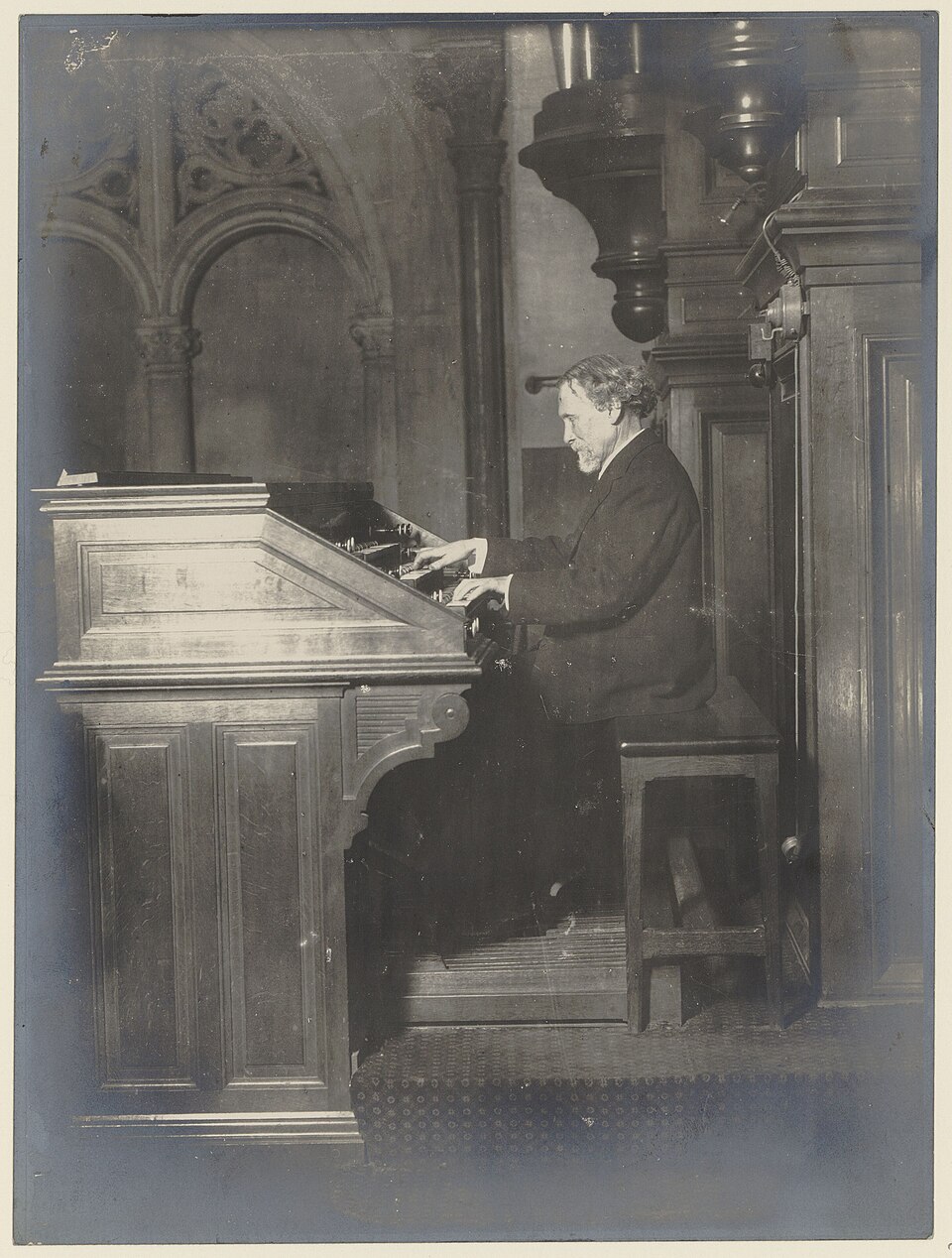
Gigout’s lasting fame rests on the 10 Pièces pour orgue of 1890, and within that set on its closing number, the Toccata in B minor. It is exactly the piece an improviser-organist would write: a perpetual-motion figuration glittering in the hands over a firm, striding theme, the whole thing building to a brilliant fortissimo close. It is brilliant to hear and grateful to play — harder-sounding than it is — and it has become one of the most frequently programmed encores in the entire repertory. The same collection holds the buoyant Scherzo in E major, almost as often heard, and a clutch of other well-made concert pieces.
Alongside the showpieces ran a steady stream of liturgical music. The large Album Grégorien and his many short chant-based pieces are the working counterpart to the toccatas — the music of a man who, after all, spent six decades supplying the services of a Paris parish. Earlier he had written the imposing Grand chœur dialogué (1881), a brassy concert piece that anticipates the public, festive manner of the French symphonic organ.
Conservatoire and legacy
The institutional honour came late. Only in 1911, succeeding Alexandre Guilmant, did Gigout become professor of organ at the Paris Conservatoire — the official crown of a career he had built largely outside the system, in his church loft and his own school. He held the chair until his death.
Gigout died in Paris on 9 December 1925, aged eighty-one, having outlived nearly all his contemporaries. He left a double legacy: a body of clean, idiomatic organ music of which the Toccata will not be dislodged from the recital programme, and a line of pupils — Marchal, Fleury, Messager, Roussel — who carried the disciplined, chant-rooted French manner into the twentieth century. The boy from Nancy who sat down at Saint-Augustin in 1863 was still there, at the same organ, sixty-two years later.