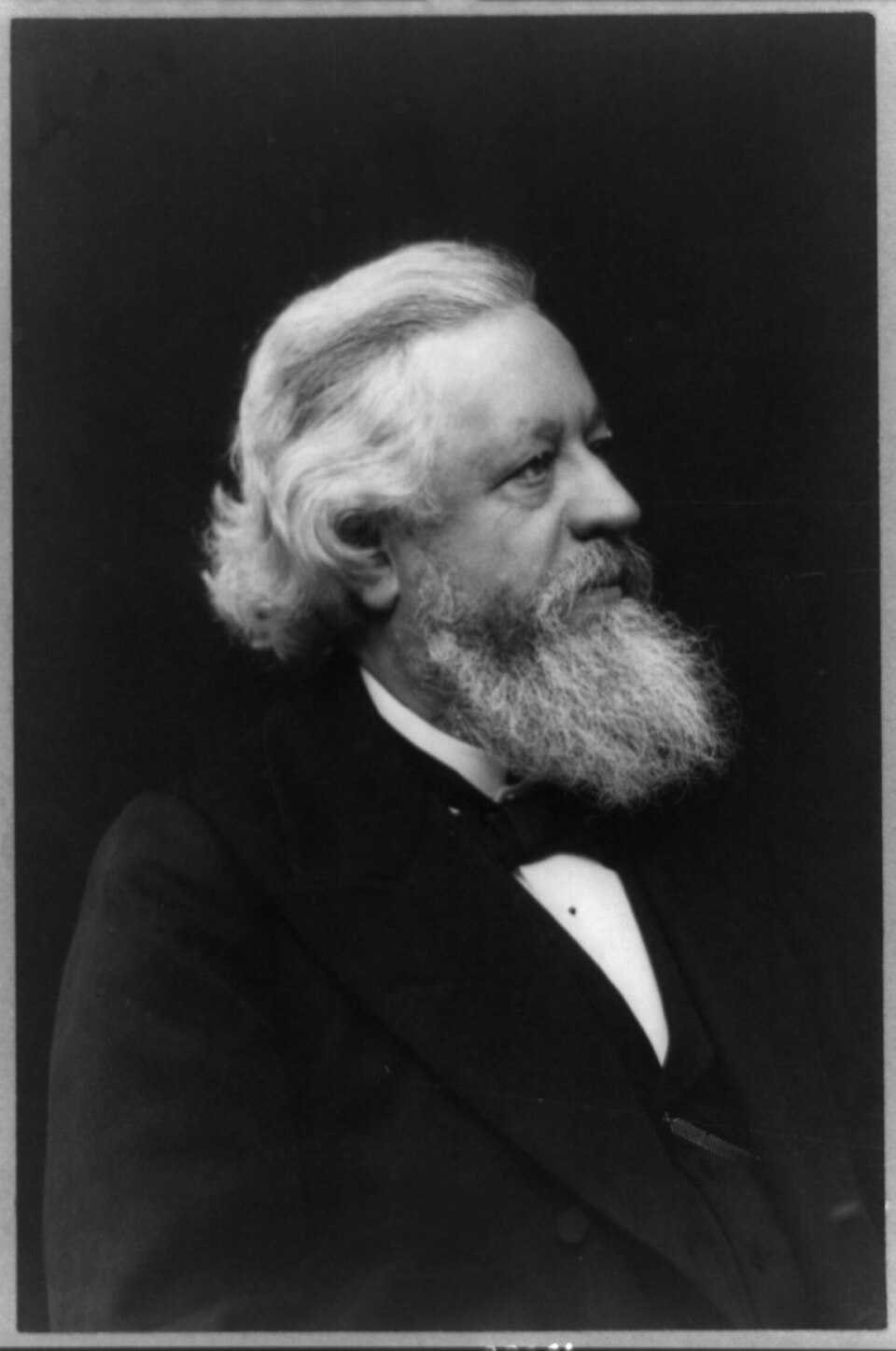
A guide to
Alexandre Guilmant
Boulogne-sur-Mer 1837 — Meudon 1911
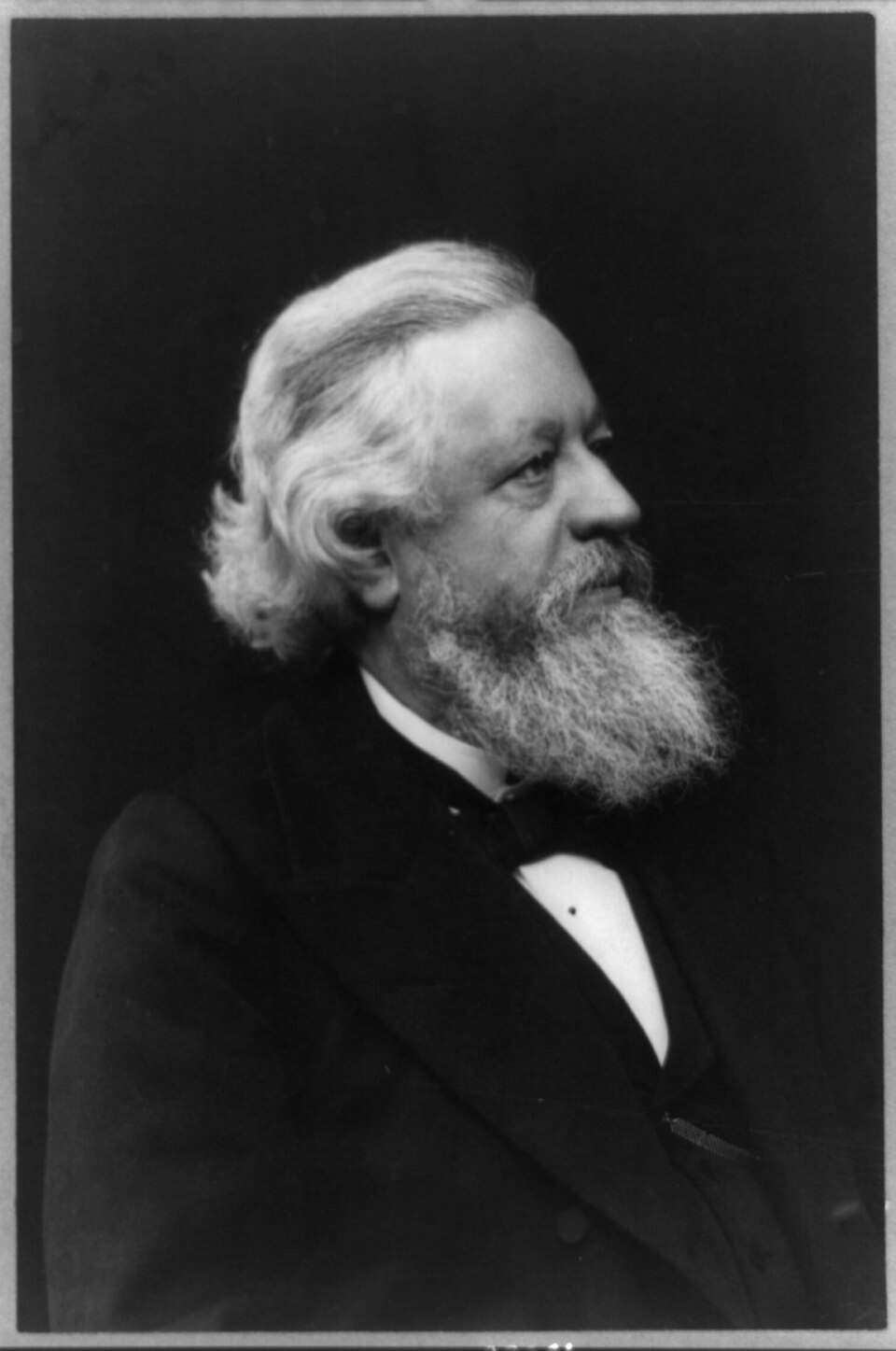
Alexandre Guilmant was the great travelling virtuoso of the French organ — the first to carry the instrument out of the church loft and onto the international concert platform. For thirty years he held the organ of La Trinité in Paris; he co-founded the Schola Cantorum, succeeded Widor as professor of organ at the Conservatoire, taught Marcel Dupré and a generation besides, and toured Europe and America as a public performer in a way no French organist had done before. He also did more than almost anyone to rescue the old French organ masters from oblivion. His eight organ sonatas are the backbone of the late-Romantic recital.
He was born in Boulogne-sur-Mer on 12 March 1837, the son of an organist, and grew up at his father’s console. The decisive step in his training was a period of study in Brussels with Jacques-Nicolas Lemmens — the same Bach-rooted Belgian pedagogue who would shape Widor. From Lemmens, Guilmant absorbed a rigorous, articulate technique and a deep reverence for Bach, and he carried both back to Paris, where in 1871 he was appointed organiste titulaire of La Trinité, the post he would hold until 1901.
The Trocadéro and the public recital
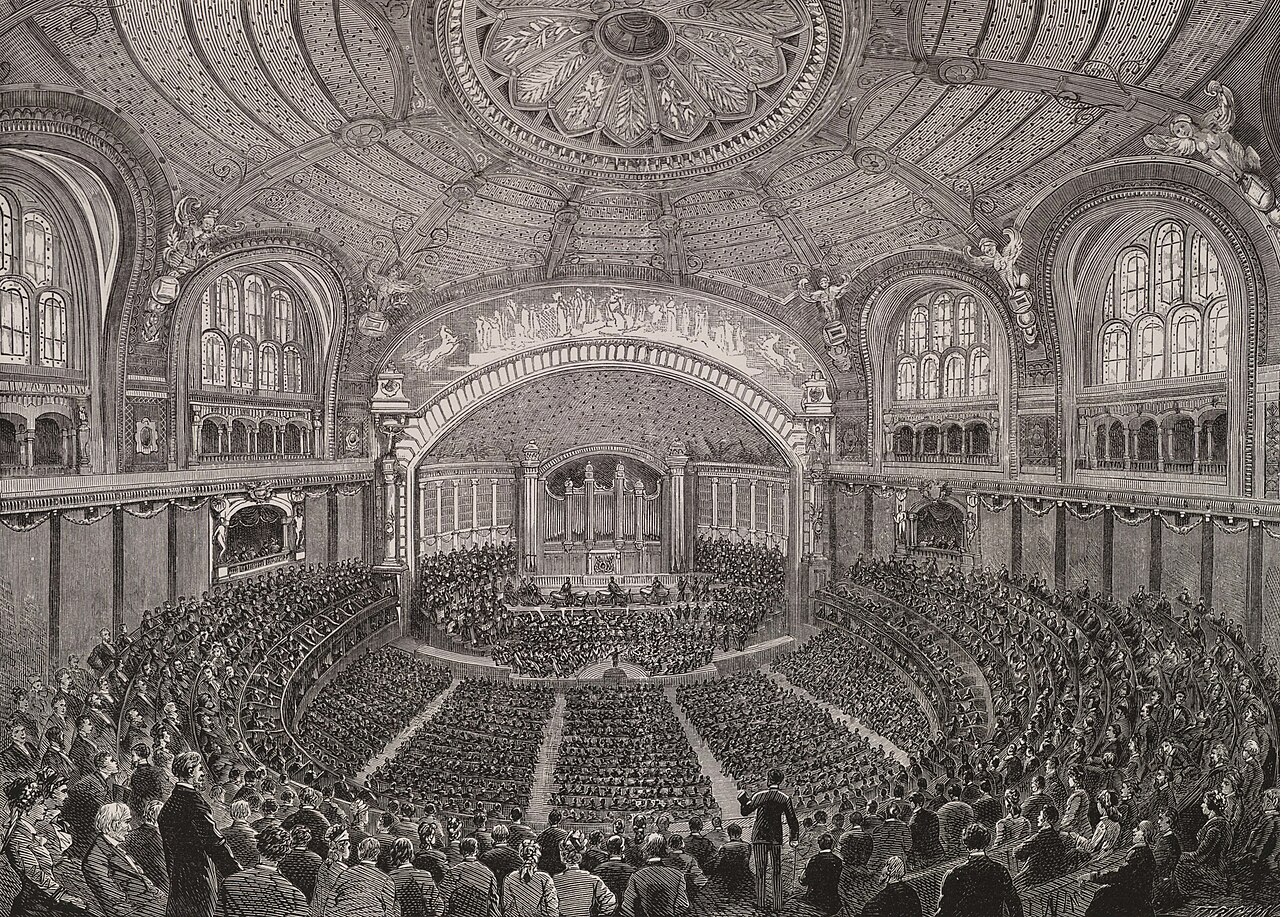
The turning point came with the 1878 Paris Exposition. A vast new concert hall, the Salle des fêtes of the Palais du Trocadéro, was built with a great Cavaillé-Coll organ, and on 7 August 1878 Guilmant gave its inaugural recital. He helped organize a series of public organ concerts during the Exposition, establishing the Trocadéro as an important venue for the public organ recital in France. The hall let audiences hear the organ in a dedicated concert setting, beyond its usual church role. It was at the Trocadéro, that same August, that his First Organ Sonata, Op. 42 was heard in its expanded form, with orchestra, as the Symphony No. 1: Guilmant had simply scored the sonata for organ and orchestra and kept the opus number.
That public, virtuoso instinct carried him abroad. He was the first major French organist to tour the United States, returning several times, with frequent visits to England as well; in 1904 he gave a marathon forty recitals on the colossal organ built for the St Louis Exposition. No organist of his generation did more to make the instrument a concert attraction.
Teacher, editor, founder
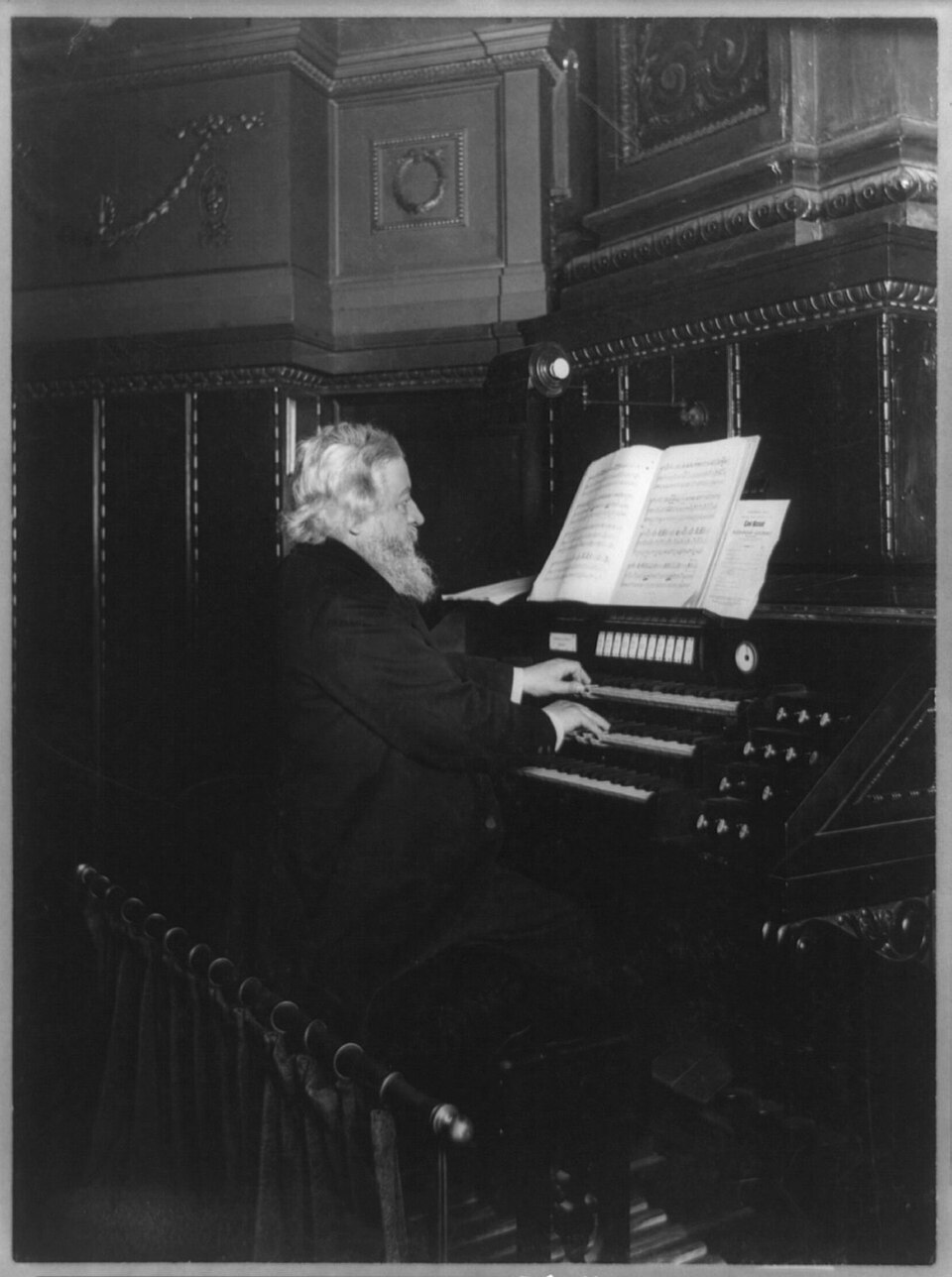
In 1894 Guilmant joined Vincent d’Indy and Charles Bordes in founding the Schola Cantorum, the Paris school dedicated to plainchant, Renaissance polyphony and a return to the great traditions of church music. Two years later, in 1896, he succeeded Widor as professor of organ at the Paris Conservatoire, and from that chair came a remarkable line of pupils: Marcel Dupré (whom he took on at the age of eleven and later groomed as his successor), Joseph Bonnet, Nadia Boulanger, and many more. He was a meticulous teacher, attentive — a pupil recalled — to “all facets of a note: attack, release, character.”
Perhaps his most lasting scholarly gift was as an editor. With the musicologist André Pirro he assembled the Archives des maîtres de l’orgue, ten volumes of pre-1750 French organ music — Titelouze, Nicolas de Grigny, Clérambault, Couperin and their contemporaries — published from 1898 onward. It was through Guilmant’s labours that the classical French organ repertory, all but forgotten, came back into print and back onto the bench. His own Livre de Noëls and other liturgical collections draw directly on that recovered tradition.
Legacy
Guilmant died at his home in Meudon, near Paris, on 29 March 1911, aged seventy-four. He left a double inheritance. As a composer, the eight organ sonatas and a stream of liturgical and concert pieces gave the French Romantic organist a working repertory of the first quality. As an editor and teacher, he handed the next century both the old masters he had rescued and the players — Dupré and Bonnet above all — who would carry the French organ tradition into the age of recording and the worldwide recital tour he himself had begun.