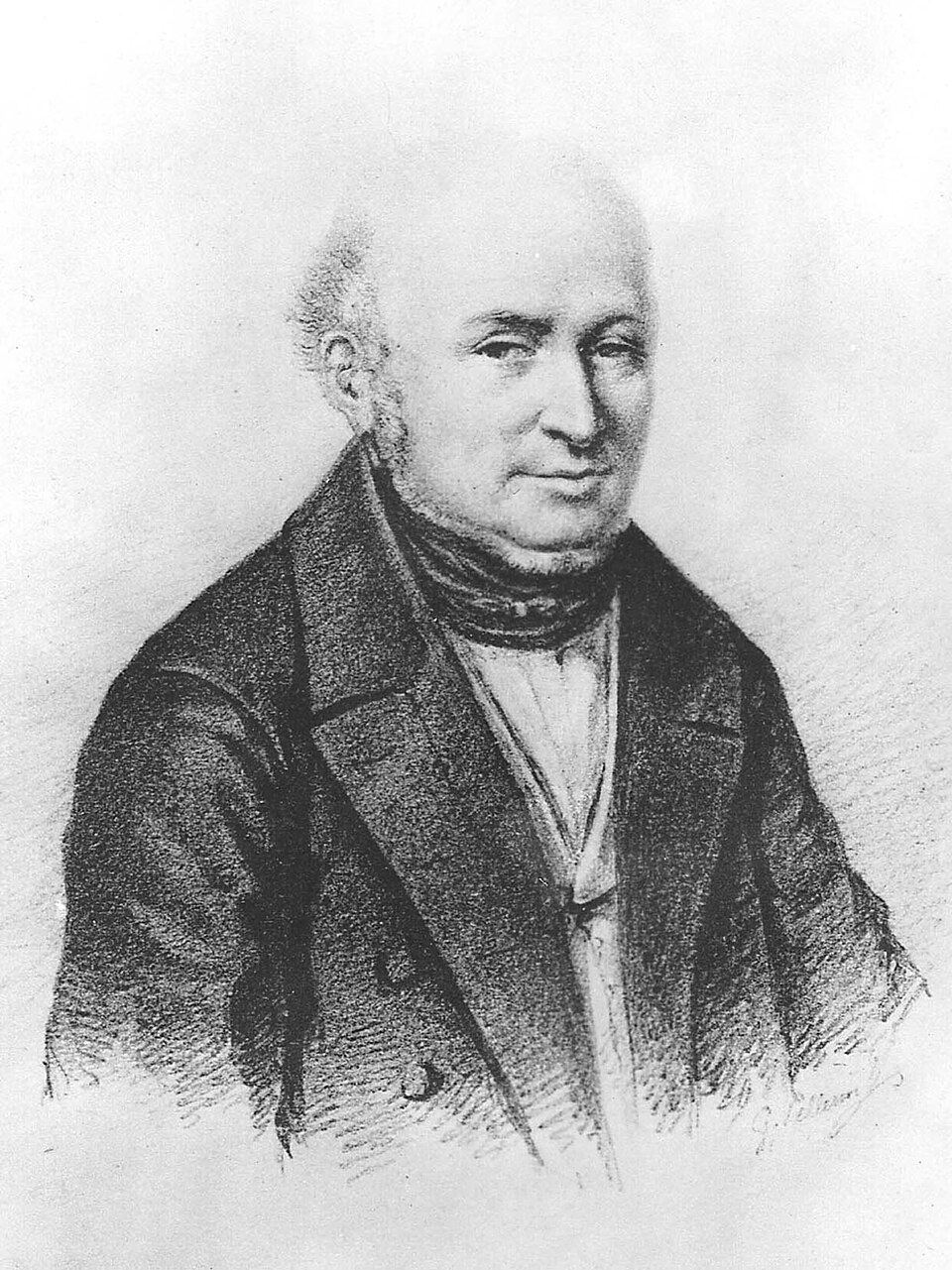
Portrait of Alexandre-Pierre-François Boëly Historical portrait · sourceHistorical portrait · Wikimedia Commons; image context in the linked biography

A guide to

Alexandre-Pierre-François Boëly

Versailles 1785 — Paris 1858
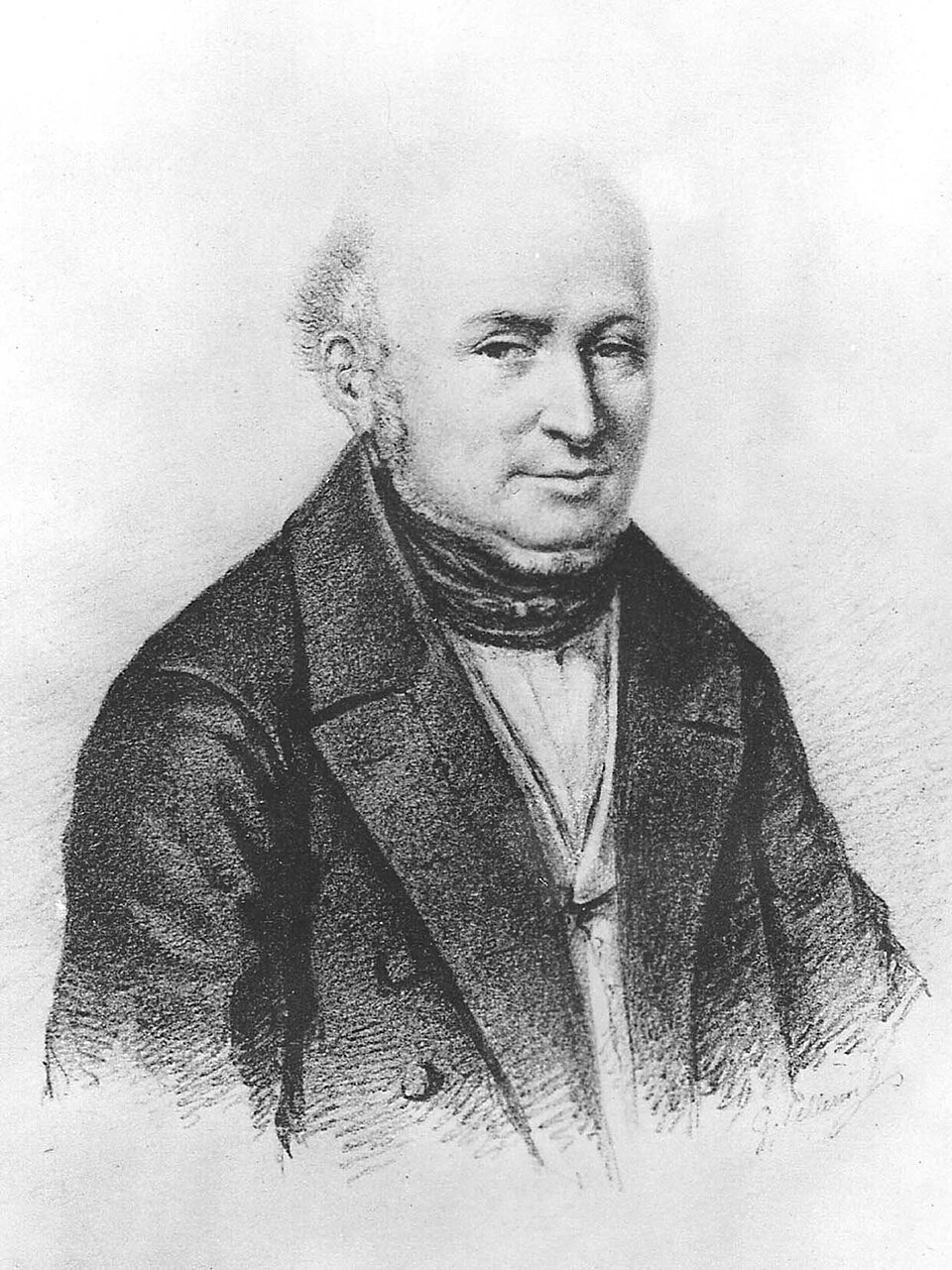
  1. 1785 Born in Versailles, 19 April, into a family of court musicians
  2. 1798 Briefly enrolled at the Paris Conservatoire
  3. 1834 Becomes organist of Saint-Gervais, Paris
  4. 1840 Appointed organist of Saint-Germain-l'Auxerrois, where he champions Bach
  5. 1851 Dismissed from Saint-Germain-l'Auxerrois for the 'austerity' of his playing
  6. 1858 Dies in Paris, 27 December, aged seventy-three
Alexandre-Pierre-François Boëly, engraving
Alexandre-Pierre-François Boëly, engraved portrait. Public domain, via Wikimedia Commons.

Alexandre-Pierre-François Boëly stands almost alone in early-nineteenth-century France: a serious, classically minded organist in an age that wanted theatre, and the man who, more than any other, kept the flame of Johann Sebastian Bach alight in Paris when Bach was still dismissed there as impenetrable and unplayable. He paid for his convictions — shunned by the musical mainstream, dismissed at last from his post for being too austere — but he handed the next generation something precious. The young Camille Saint-Saëns and César Franck revered him as the guardian of a noble, pure organ tradition, and through them his quiet integrity reached the heart of the French organ school.

He was born in Versailles on 19 April 1785, into a family of court musicians; his father was a singer and harp teacher at the court of Versailles, and gave him his first lessons. The decisive influence on his taste was the Tyrolean pianist Ignaz Ladurner, who introduced him to the music of Bach and Haydn — the masters Boëly would champion for the rest of his life. He grew into a complete musician: a fine pianist and organist, and a capable violist besides, with a catalogue that would eventually run to some three hundred works.


Saint-Germain-l’Auxerrois and the cause of Bach
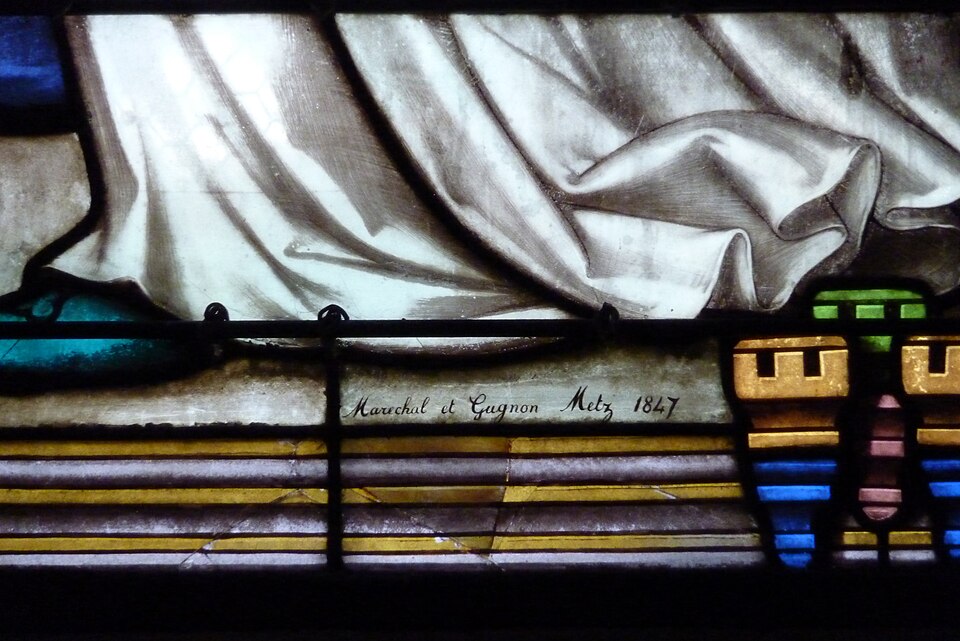
The Church of Saint-Germain-l'Auxerrois, Paris
The Church of Saint-Germain-l'Auxerrois, Paris, opposite the Louvre. Boëly was its organist from 1840 until his dismissal in 1851. Photograph, via Wikimedia Commons.

Boëly’s most important appointment came in 1840, when he became organist of Saint-Germain-l’Auxerrois, the royal parish church facing the Louvre. From that loft he set himself a mission as much as a job: to promote the great classical masters his contemporaries had forgotten or never known — Frescobaldi, François Couperin, and above all Bach, “the supposedly impenetrable, unplayable Bach.” Where the Paris organists of the day improvised operatic fantasias and storm pieces, Boëly played fugues, and he wrote real counterpoint with a genuine, independent pedal line — a thing almost unknown in France, where the organ’s pedalboard was often barely used.

His seriousness made him an outsider. He was, in the words of the reference literature, “shunned by the official mainstream of musical life in Paris because of his classical sensibilities” and his “elitist” fidelity to serious music. But a discerning circle respected him — the pianists Friedrich Kalkbrenner and Johann Baptist Cramer, the violinist Pierre Baillot, the pianist Marie Bigot all valued his company. In 1851 the price of his austerity came due: he was dismissed from Saint-Germain-l’Auxerrois precisely because his playing was judged too severe for the parish’s taste. He spent his remaining years teaching the piano.


A bridge between two ages
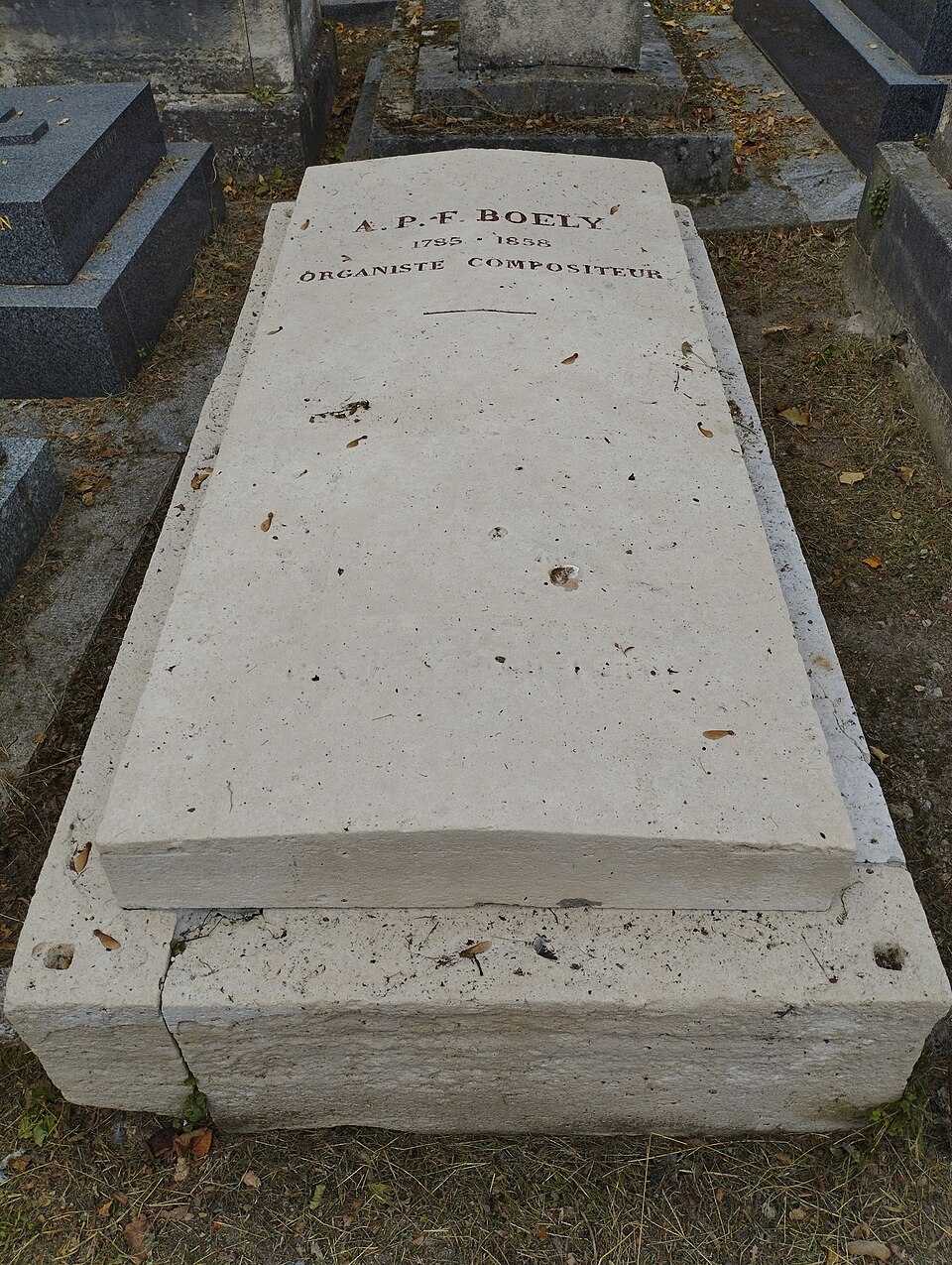
The grave of Alexandre Boëly, Montmartre Cemetery
The grave of Alexandre Boëly, Montmartre Cemetery, Paris. Photograph, via Wikimedia Commons.

Boëly’s own music sits at a hinge of history. Schooled on Bach and the Viennese classics, he wrote with a contrapuntal discipline that belongs to the eighteenth century, yet his harmonic language reaches forward into the Romantic. His organ pieces — the 12 Pièces pour orgue, the many Pièces de différents caractères, the Messe d’orgue and the Recueil de noëls — restored to the French organ both its pedal and its sense of structure, just before the great Cavaillé-Coll instruments arrived to give that seriousness a new voice. He is, in the textbooks’ phrase, the man who bridged the classical and Romantic traditions of French organ music.

He died in Paris on 27 December 1858, aged seventy-three, and was buried in Montmartre Cemetery. At his requiem the young Saint-Saëns played — a small, deliberate act of homage. It was a fitting tribute, for Boëly’s true legacy was not a famous piece but a transmission: he held the line of Bach and the classical masters through the most theatrical decades of the French organ, and handed it intact to Franck, Saint-Saëns, and the whole serious school that followed. The repertory they built stands, in part, on the obstinate integrity of the man dismissed for playing too well.

All works (36)

one row per PDF across every work · semicolon-delimited

Undated works follow in catalogue order.Filter these works →

CatalogTitleInstrumentation
Op1 2 Piano Sonatas
Open individual scores (1)PDF on IMSLP ↗IMSLP work page ↗
1 PDF Spotify Apple Music
Op2 30 Caprices
Open individual scores (1)PDF on IMSLP ↗IMSLP work page ↗
1 PDF Spotify Apple Music
Op6 30 Etudes
Open individual scores (1)PDF on IMSLP ↗IMSLP work page ↗
1 PDF Spotify Apple Music
Op7 Caprice
Open individual scores (1)PDF on IMSLP ↗IMSLP work page ↗
MIDI1 PDF Spotify Apple Music
Op10 14 Pieces
Open individual scores (1)PDF on IMSLP ↗IMSLP work page ↗
1 PDF Spotify Apple Music
Op11 Messe du jour de Noël
Open individual scores (1)PDF on IMSLP ↗IMSLP work page ↗
MIDI1 PDF Spotify Apple Music
Op12 24 Pièces pour l orgue
Open individual scores (3)PDF on IMSLP ↗IMSLP work page ↗PDF on IMSLP ↗IMSLP work page ↗PDF on IMSLP ↗IMSLP work page ↗
MIDI3 PDFs Spotify Apple Music
Op14 Douze Morceaux
Open individual scores (1)PDF on IMSLP ↗IMSLP work page ↗
1 PDF Spotify Apple Music
Op15 Recueil de noëls
Open individual scores (1)PDF on IMSLP ↗IMSLP work page ↗
1 PDF Spotify Apple Music
Op18 12 Pièces pour orgue
Open individual scores (4)PDF on IMSLP ↗IMSLP work page ↗PDF on IMSLP ↗IMSLP work page ↗PDF on IMSLP ↗IMSLP work page ↗PDF on IMSLP ↗IMSLP work page ↗
MIDI4 PDFs Spotify Apple Music
Op20 24 Pièces pour piano
Open individual scores (4)PDF on IMSLP ↗IMSLP work page ↗PDF on IMSLP ↗IMSLP work page ↗PDF on IMSLP ↗IMSLP work page ↗PDF on IMSLP ↗IMSLP work page ↗
MIDI4 PDFs Spotify Apple Music
Op21 Fantaisie
Open individual scores (1)PDF on IMSLP ↗IMSLP work page ↗
1 PDF Spotify Apple Music
Op33 12 Pièces caractéristiques
Open individual scores (1)PDF on IMSLP ↗IMSLP work page ↗
1 PDF Spotify Apple Music
Op35 12 Pièces de différents caractères
Open individual scores (1)PDF on IMSLP ↗IMSLP work page ↗
1 PDF Spotify Apple Music
Op36 12 Pièces de différents caractères
Open individual scores (1)PDF on IMSLP ↗IMSLP work page ↗
1 PDF Spotify Apple Music
Op38 12 Pièces de différents caractères
Open individual scores (3)PDF on IMSLP ↗IMSLP work page ↗PDF on IMSLP ↗IMSLP work page ↗PDF on IMSLP ↗IMSLP work page ↗
3 PDFs Spotify Apple Music
Op40 12 Pièces de différents caractères
Open individual scores (1)PDF on IMSLP ↗IMSLP work page ↗
1 PDF Spotify Apple Music
Op42 14 Pièces de différents caractères
Open individual scores (1)PDF on IMSLP ↗IMSLP work page ↗
1 PDF Spotify Apple Music
Op46 12 Pièces caractéristiques
Open individual scores (1)PDF on IMSLP ↗IMSLP work page ↗
1 PDF Spotify Apple Music
Op48 12 Pièces caractéristiques
Open individual scores (3)PDF on IMSLP ↗IMSLP work page ↗PDF on IMSLP ↗IMSLP work page ↗PDF on IMSLP ↗IMSLP work page ↗
3 PDFs Spotify Apple Music
Op49 12 Pièces caractéristiques
Open individual scores (1)PDF on IMSLP ↗IMSLP work page ↗
1 PDF Spotify Apple Music
Op50 12 Pièces caractéristiques
Open individual scores (1)PDF on IMSLP ↗IMSLP work page ↗
1 PDF Spotify Apple Music
Op51 12 Pièces caractéristiques
Open individual scores (1)PDF on IMSLP ↗IMSLP work page ↗
1 PDF Spotify Apple Music
Op52 12 Pièces caractéristiques
Open individual scores (1)PDF on IMSLP ↗IMSLP work page ↗
1 PDF Spotify Apple Music
Op53 12 Pièces caractéristiques
Open individual scores (1)PDF on IMSLP ↗IMSLP work page ↗
1 PDF Spotify Apple Music
Op56 11 Pièces caractéristiques
Open individual scores (1)PDF on IMSLP ↗IMSLP work page ↗
1 PDF Spotify Apple Music
2 Preludes
Open individual scores (1)PDF on IMSLP ↗IMSLP work page ↗
1 PDF Spotify Apple Music
3 Preludes
Open individual scores (1)PDF on IMSLP ↗IMSLP work page ↗
MIDI1 PDF Spotify Apple Music
Bin ich gleich von dir gewichen
Open individual scores (1)PDF on IMSLP ↗IMSLP work page ↗
1 PDF Spotify Apple Music
Interlude for Organ
Open individual scores (1)PDF on IMSLP ↗IMSLP work page ↗
1 PDF Spotify Apple Music
Le carillon des morts, Op.39 No.11
Open individual scores (1)PDF on IMSLP ↗IMSLP work page ↗
1 PDF Spotify Apple Music
Messe d'orgue
Open individual scores (1)PDF on IMSLP ↗IMSLP work page ↗
1 PDF Spotify Apple Music
Noël Suisse
Open individual scores (1)PDF on IMSLP ↗IMSLP work page ↗
1 PDF Spotify Apple Music
Offertoire in D minor
Open individual scores (1)PDF on IMSLP ↗IMSLP work page ↗
1 PDF Spotify Apple Music
Pièces choisies pour orgue
Open individual scores (1)PDF on IMSLP ↗IMSLP work page ↗
1 PDF Spotify Apple Music
Quatre Offertoires
Open individual scores (1)PDF on IMSLP ↗IMSLP work page ↗
1 PDF Spotify Apple Music