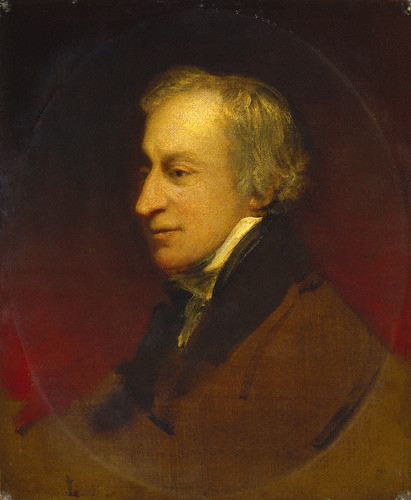

Samuel Wesley
1766 — 1837
Samuel Wesley was an English organist and composer in the late Georgian period. Wesley was a contemporary of Mozart (1756–1791) and was called by some “the English Mozart”.
Adapted from the Wikipedia article on Samuel Wesley (composer, born 1766).
From the period sources
Samuel Wesley was a pivotal figure in the early 19th-century revival of J.S. Bach’s music in England, with his efforts, alongside Mendelssohn’s in Germany, credited by A Biographical Dictionary of Musicians (1886) for Bach’s “present advance in public esteem.” Wesley himself was a celebrated organist, known for performing Bach and Handel’s fugues and preludes before audiences of nearly 3,000 people, often alternating with Dr. Crotch and Benjamin Jacob in the years 1809, 1811, 1812, and 1814, as recorded in Biographie universelle des musiciens (1883). His influence extended to a younger generation of musicians, as he taught notable organists such as Edward Francis Rimbault, who completed his musical education under Wesley’s direction (Biographie universelle des musiciens, 1866), and Francis Edward Gladstone, who was Wesley’s pupil from 1859 to 1864 (A Biographical Dictionary of Musicians, 1900). Wesley’s organ playing was keenly observed, with Dr. Gauntlett noting that while others played Bach, Wesley “taught us how to play the slow fugue,” and introduced many pedal-fugues previously unknown in England, according to Grove’s Dictionary of Music and Musicians (1904). He even gave weekly performances on the seraphine, an English free-reed instrument, at John Green’s shop in Soho Square, helping to sell the instruments for 40 guineas each, though the seraphine’s “harsh and raspy tone” ultimately limited its appeal (Grove’s Dictionary of Music and Musicians, 1908).