A guide to
Charles Villiers Stanford
Dublin 1852 — London 1924
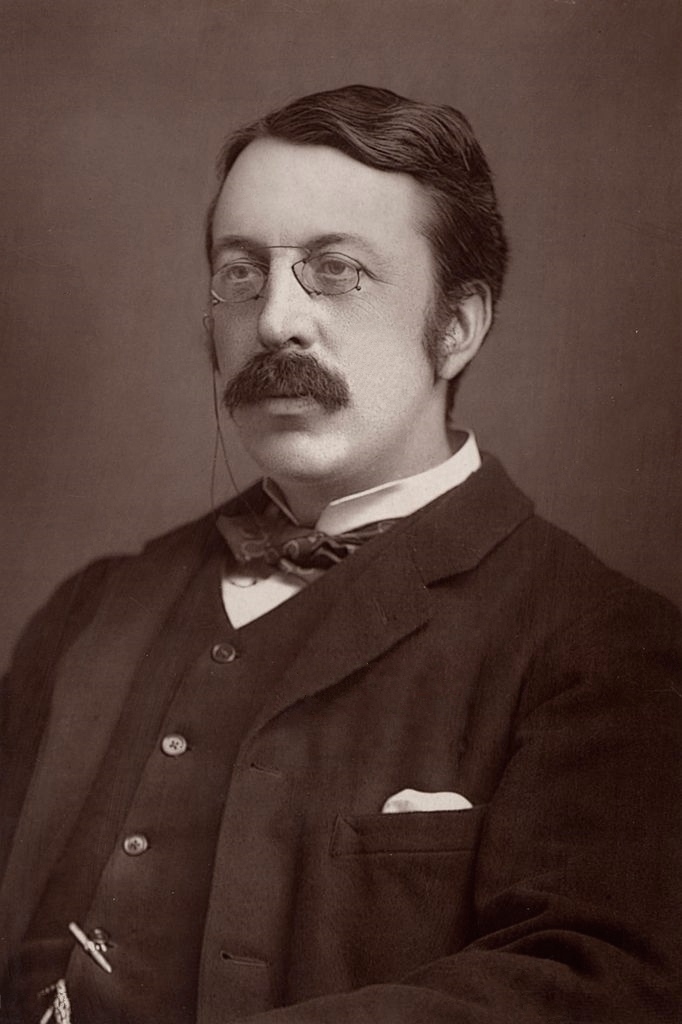
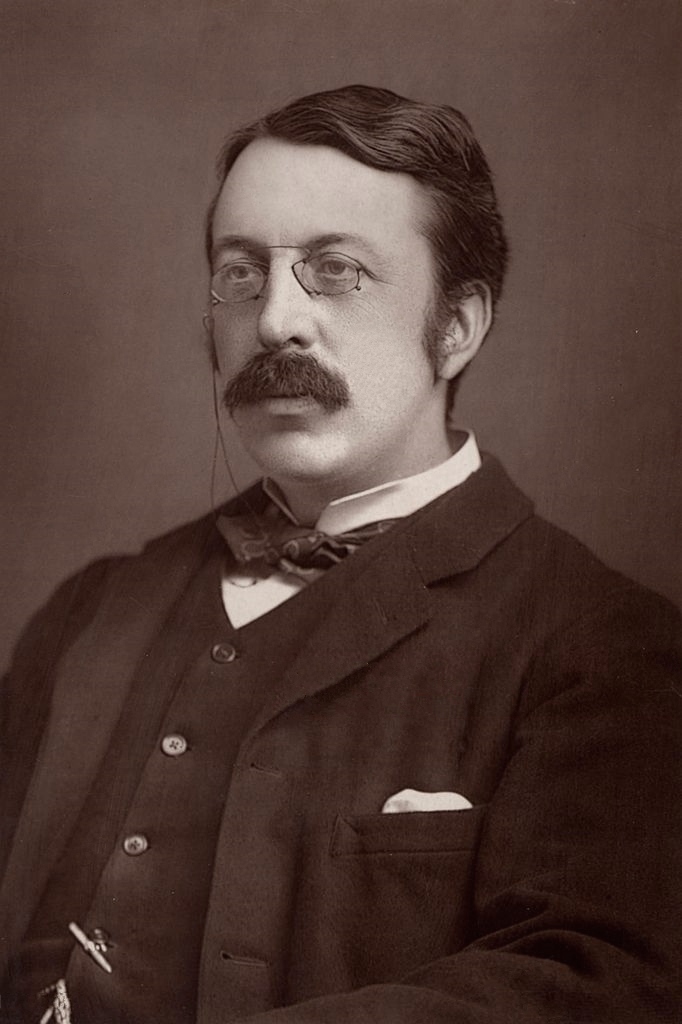
Charles Villiers Stanford was the great teacher of the English musical renaissance — the man who trained Vaughan Williams, Holst, Frank Bridge, John Ireland, Herbert Howells and a whole generation of British composers — and, in his own right, the most fluent church and organ composer of his age. An Irishman who made his career in England, he held the organ loft of Trinity College, Cambridge, and chairs at both Cambridge and the new Royal College of Music for more than forty years. His symphonies and operas have faded; his Anglican services, motets and organ music are sung and played every week, somewhere, still.
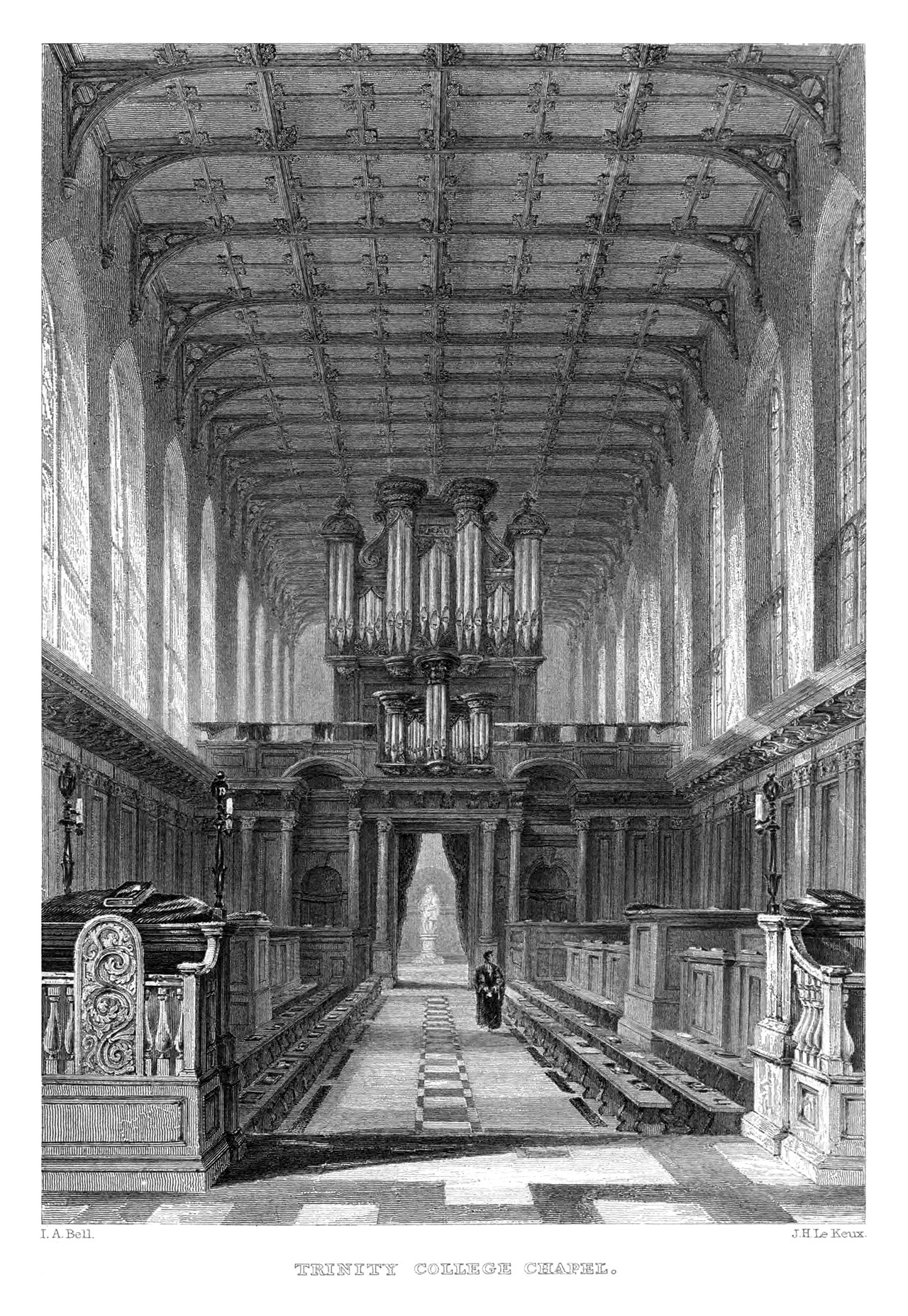
He was born in Dublin on 30 September 1852, the only child of a prosperous lawyer who was also a serious amateur cellist and bass — his father had sung in the Irish premiere of Mendelssohn’s Elijah. A precocious organist and pianist, Stanford went up to Cambridge in 1870, took an organ scholarship, and in 1874, while still an undergraduate, was appointed organist of Trinity College. He completed his training in the German heartland — summers with Carl Reinecke at the Leipzig Conservatory, then with Friedrich Kiel in Berlin, whom he thought the finer teacher. He came home a thoroughgoing Brahmsian, and a Brahmsian he remained to the end.
The teacher at the Royal College
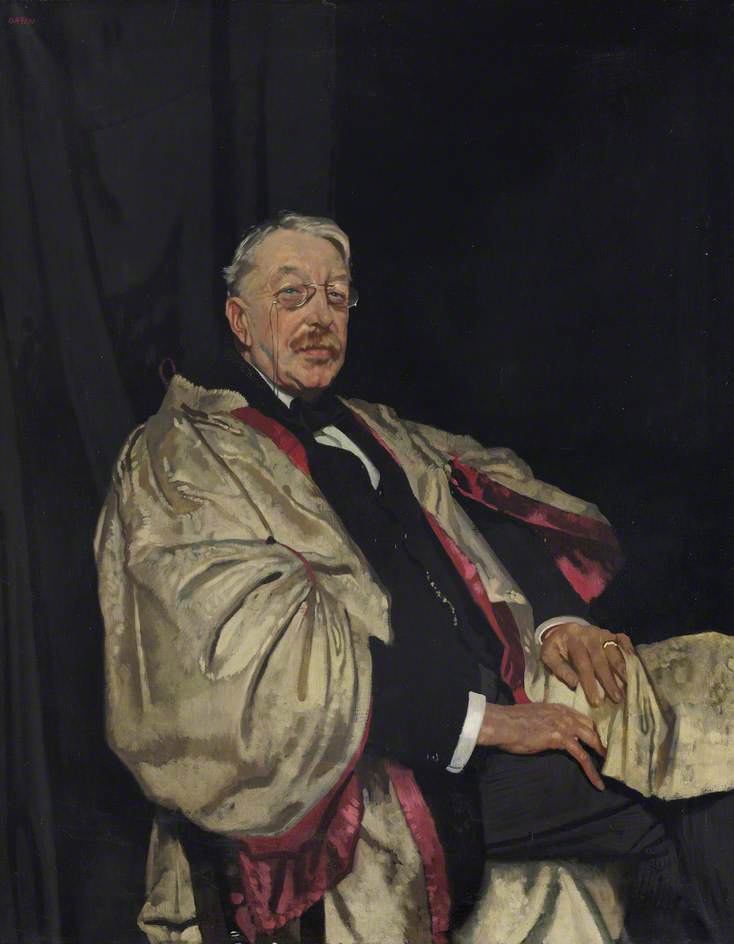
When George Grove — of the famous Dictionary — founded the Royal College of Music in 1883, Stanford was among its first professors of composition, a post he held until his death; in 1887 he added the Professorship of Music at Cambridge. From these two chairs flowed his real legacy. He was a famously fierce teacher — conservative, scornful of slovenliness, his verdicts cryptic and brutal. The young Edgar Bainton remembered the whole of Stanford’s criticism reducing to either “I like it, my boy” or, far more often, “It’s damned ugly, my boy.” Herbert Howells recalled pupils going into his room and coming out “badly damaged.”
Yet the results were extraordinary. Gustav Holst called him “the one man who could get any one of us out of a technical mess,” and Vaughan Williams, who chafed against him at the time, came to praise his church music for its “imperishable beauty.” The composer George Dyson drew the paradox precisely: Stanford’s rigid classicism, he wrote, was the very thing that drove his pupils into “various forms of revolution” — and, given what they went on to achieve, “one is tempted to wonder whether there is really anything better a teacher can do for his pupils than drive them into” rebellion.
The church and the organ
Stanford’s most enduring music is for the Church of England. His service settings — the Magnificat and Nunc dimittis in B-flat (1879), in A, in F, in G, in C — restored, in the words of the scholar Nicholas Temperley, the Anglican canticle “to its full place beside the anthem as a worthy object of artistic invention.” His Three Latin Motets, Op. 38 (1888), among them the radiant Beati quorum via, are unaccompanied choral writing of the highest finish. Any English chorister knows this music from the inside.
For the organ he wrote a steady stream of preludes, postludes and five sonatas. The finest is the Organ Sonata No. 2 in G minor, Op. 151, the “Eroica,” written in August 1917 and dedicated to Charles-Marie Widor “and the great country to which he belongs.” Its outer movements bear the names Rheims and Verdun — the bombed Gothic cathedral and the catastrophic year-long battle of 1916 — and the first movement folds in the Easter plainsong O filii et filiae. It is a war memorial in sound, an Irish-English organist’s homage to a France in agony, and the most serious thing Stanford gave the instrument.
Last years and after
By his later life the world had moved past him. Elgar, whom Stanford had at first championed and then bitterly resented, eclipsed him; so did his own pupils. The critic Bernard Shaw, who in 1891 had lumped him with Parry and Mackenzie as a “mutual admiration society,” coined the lasting charge — that there were two Stanfords, “Stanford the Celt,” spirited and tuneful, and “Stanford the Professor,” correct but cold. The Great War struck him hard: among his former students George Butterworth was killed, Ivor Gurney gassed, Arthur Bliss wounded.
He died in London on 29 March 1924, aged seventy-one, and his ashes were interred in Westminster Abbey, in the north choir aisle close to Purcell and Blow — the English composers’ corner. The Times observed that the placement “showed how thoroughly as composer he belonged to” that line. It was, in the end, a fitting verdict for the Dubliner who had spent his life teaching England to take its own music seriously again.