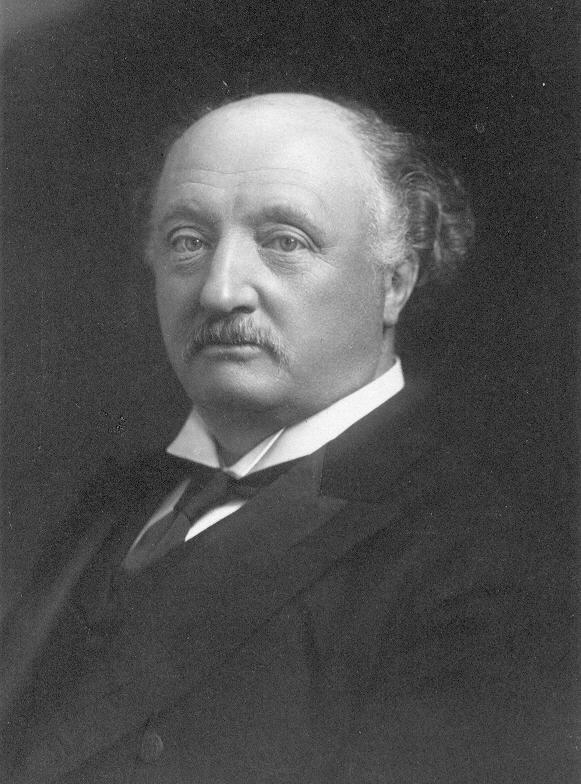

John Stainer
1840 — 1901
Sir John Stainer was an English composer and organist whose music, though seldom performed today, was very popular during his lifetime. His work as choir trainer and organist set standards for Anglican church music that are still influential. He was also active as an academic, becoming Heather Professor of Music at Oxford.
Adapted from the Wikipedia article on John Stainer.
From the period sources
Sir John Stainer was a prominent figure in English music, known both as a composer and an educator. He served as a professor of music at Oxford, succeeding Sir Frederick Ouseley in that role, according to Famous Composers and Their Works (1891). His teaching extended to notable pupils like Eugene d’Albert, who studied harmony and composition under him at the National Training School in London (A Biographical Dictionary of Musicians, 1900).
Beyond his academic and compositional work, Stainer was involved in significant musical projects. He co-edited a “Dictionary of Musical Terms” with William Alexander Barrett, first published in 1875 and reaching a third edition by 1888 (A Biographical Dictionary of Musicians, 1900; Dictionary of Music, 1896). He also contributed to the revival of older performance practices, notably employing the piano for recitative accompaniment at St. Paul’s in various oratorios, a return to a method previously used by Mr. Otto Goldschmidt in 1863 (Grove’s Dictionary of Music and Musicians, 1922). Stainer’s cantata, Saint Mary Magdalen, first performed in Gloucester in 1883, was considered “the composer’s best work” by Cyclopedia of Music and Musicians (1890), written “in accordance with the theories of both Schumann and Wagner.” He was also an early Vice-President of the Folk-Song Society, established in London in 1898 (Grove’s Dictionary of Music and Musicians, 2nd ed., Vol. 2, 1906).