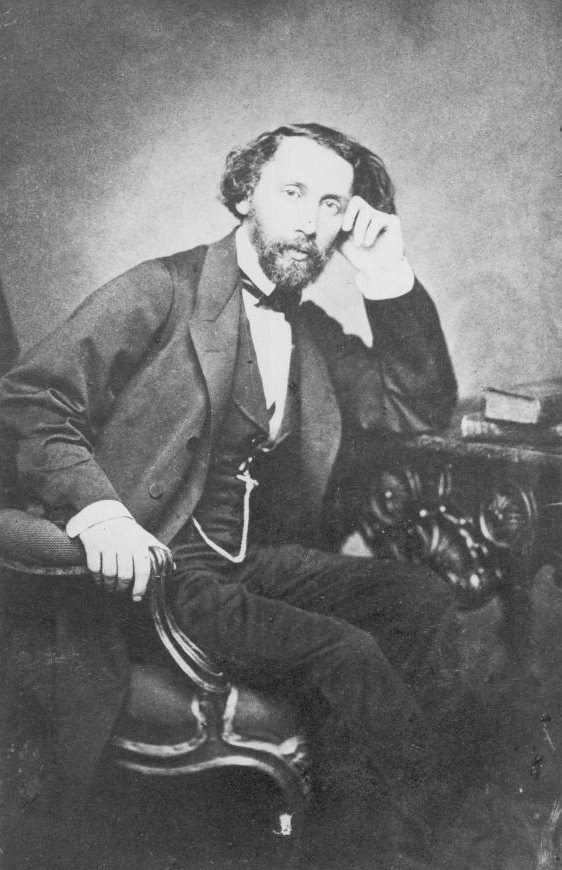

Julius Schulhoff
1825 — 1898
Julius Schulhoff was a Bohemian pianist and composer of Jewish birth. As a composer, he was best known for his virtuosic salon pieces for solo piano, which included a grand sonata in F minor, twelve études, and various caprices, impromptus, waltzes, and mazurkas.
Adapted from the Wikipedia article on Julius Schulhoff.
From the period sources
Julius Schulhoff, a Bohemian pianist and composer, received his early musical training in Prague, studying piano with Kisch and Tedesco, and counterpoint under the eminent teacher Johann Wenzel Tomaschek, who also taught notable figures like Alexander Dreyschock and Wilhelm Kuhe (Grove’s Dictionary, 1906; A Biographical Dictionary of Musicians, 1900). Before the age of fourteen, Schulhoff made a successful public appearance as a player, yet his ambition led him to Paris in 1842, a city then considered “a hotbed of pianoforte virtuosity” (Grove’s Dictionary, 1922). There, a pivotal encounter with Frédéric Chopin, whom Schulhoff approached at Pleyel’s piano shop, proved instrumental. Though initially reluctant, Chopin was captivated by Schulhoff’s “original talent” and “warmly congratulated” him, encouraging him to perform publicly (Biographie universelle des musiciens, 1866).
Schulhoff’s Paris debut on November 2, 1845, at Érard, created a “vivid emotion among artists,” with critic Henri Blanchard declaring him a “pianiste chanteur” whose playing and music possessed “fantaisie” (Biographie universelle des musiciens, 1866). His early works, including the Allegro Brillant, Op. 1, were dedicated to Chopin (Grove’s Dictionary, 1922). Following his Parisian success, Schulhoff embarked on extensive concert tours through France, Austria, England, Spain, and even South Russia and the Crimea between 1849 and 1853 (Grove’s Dictionary, 1922). His published compositions, primarily for piano, were regarded as “the better class of salon music,” combining “exterior brilliancy and show with good writing,” and included popular pieces like the Galop di Bravura and Impromptu Polka, alongside more serious works such as a sonata in F minor and twelve etudes (Dictionary of Music, 1896). He was also noted for his “elegant execution” and “charming trifles” (A History of Pianoforte-Playing, 1897). Schulhoff’s influence extended to younger musicians, as he later taught piano to Alexander von Fielitz in Dresden (A Biographical Dictionary of Musicians, 1900). He resided in Dresden from 1870 and later in Berlin, where he died on March 13, 1898 (Grove’s Dictionary, 1922).