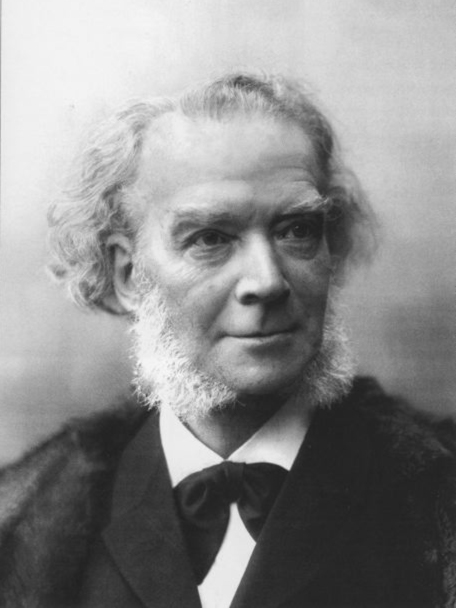

Carl Reinecke
1824 — 1910
Carl Heinrich Carsten Reinecke was a German composer, conductor, and pianist in the mid-Romantic era.
Adapted from the Wikipedia article on Carl Reinecke.
From the period sources
Carl Heinrich Carsten Reinecke, born in Altona in 1824, was trained from an early age by his musician father and performed publicly as a pianist by age eleven, according to Grove’s Dictionary of Music and Musicians (1922). As a youth, he was also noted as a first-rate orchestral violin-player. He embarked on concert tours through Sweden and Denmark at eighteen, finding particular success in Copenhagen. In 1843, Reinecke settled in Leipzig, where he diligently studied and “eagerly embraced the opportunities for cultivation afforded by the society of Mendelssohn and Schumann,” a success amply reflected in his music, as Grove’s notes.
His career saw him appointed court-pianist to Christian VIII of Denmark in 1846, and later, Ferdinand Hiller secured him for a professorship of piano and counterpoint at the Conservatorium of Cologne in 1851. Reinecke became conductor of the Concertgesellschaft at Barmen in 1854, and in 1859, Musikdirector to the University of Breslau. His most prominent role began in 1860, when he succeeded Julius Rietz as conductor at the Leipzig Gewandhaus and simultaneously became a professor of composition at the Conservatorium. Grove’s Dictionary (1922) records his extensive tours between 1867 and 1872, including successful appearances in England as both a virtuoso and composer. His piano works, especially his three sonatas, are described as “excellent compositions, carrying out Mendelssohn’s technique without indulging the eccentricities of modern virtuosi.” He was also recognized as a first-rate accompanist and one of the foremost arrangers for the pianoforte of his day.