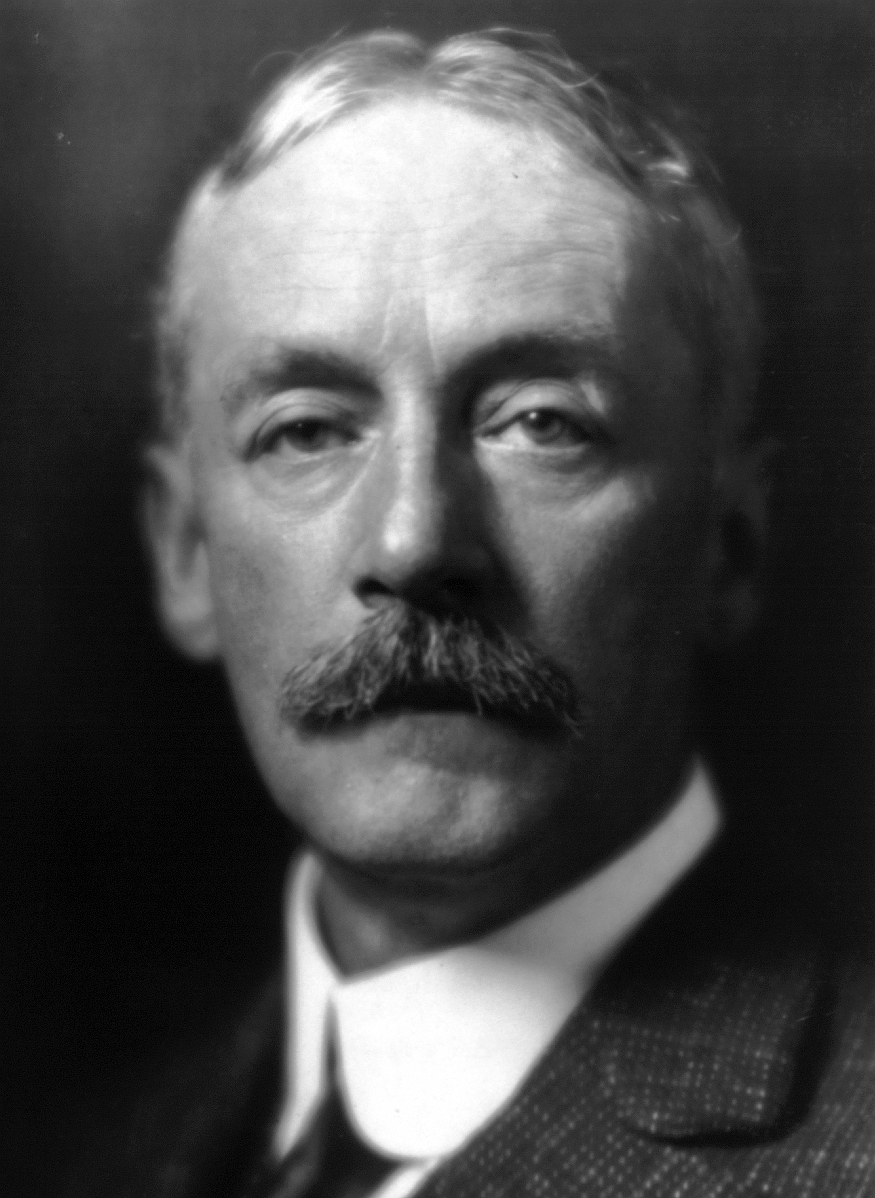

Horatio Parker
1863 — 1919
Horatio William Parker was an American composer, organist and teacher. He was a central figure in musical life in New Haven, Connecticut in the late 19th century, and is best remembered as the undergraduate teacher of Charles Ives while the composer attended Yale University.
Adapted from the Wikipedia article on Horatio Parker.
From the period sources
Horatio William Parker, an American composer and organist, was born in Auburndale, Massachusetts, on September 15, 1863, to American parents, and was still living in 1890, according to the Cyclopedia of Music and Musicians (1890). His early musical education began in 1877 with his mother, who was an accomplished musician. He then studied in Boston with Stephen A. Emery for harmony and pianoforte, John Orth for pianoforte, and George W. Chadwick for composition. In 1882, Parker traveled to Munich, where he spent three years studying organ and composition under Josef Rheinberger, and conducting under Ludwig Abel.
Upon his return to America in 1885, Parker became a professor of music at the Cathedral Schools of St. Paul and St. Mary in Garden City, Long Island. He also served as organist and choirmaster at St. Andrew’s Church in Harlem, New York, starting in 1886, and later at the Church of the Holy Trinity on Madison Avenue, New York, in 1888, while retaining his position at St. Mary’s School. His cantata, King Trojan, was successfully performed in Munich in 1885, and his Hora Novissima was produced in New York in 1893, later performed in England at Worcester in 1899, as noted by the Dictionary of Music (1908). Parker was appointed Professor of Music at Yale University in 1894. His compositions include orchestral works like a concert overture in E-flat (Munich, 1884) and a Symphony in C major (Munich, 1885), as well as choral pieces such as Psalm xxiii. for female chorus, organ, and harp (Munich, 1884), and Der Normannenzug for male chorus and orchestra (New York, 1889). He also composed chamber music, organ and pianoforte music, and various songs and part-songs for different vocal ensembles (Cyclopedia of Music and Musicians, 1890). G. Schirmer, a prominent music publisher, included Parker’s works in their catalogue, alongside other American composers like Dudley Buck and George W. Chadwick (Grove’s Dictionary of Music and Musicians, 1908). Grove’s Dictionary (1908) further notes that while Parker did important work in other branches of music, the accompaniments to his songs are considered “interesting and varied.”