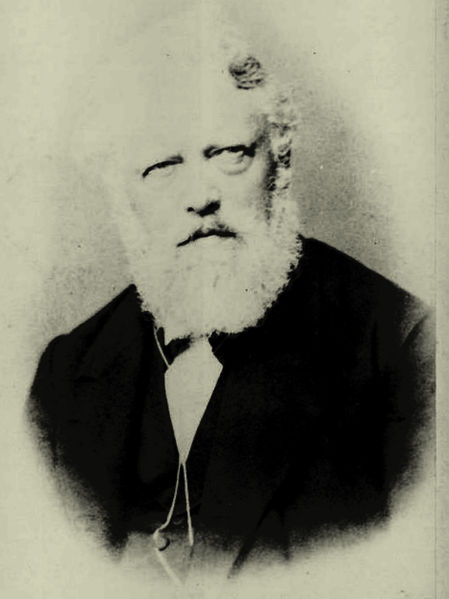

Theodore Oesten
1813 — 1870
Theodore Oesten was a German composer, musician, and music teacher.
Adapted from the Wikipedia article on Theodore Oesten.
From the period sources
Theodor Oesten, born in Berlin in 1813, initially received instruction in various wind and string instruments from the town-musician Politzki at Fürstenwald, and learned pianoforte from a local schoolmaster. At the age of nineteen, he moved to Berlin, where he pursued more formal studies in composition with Bohmer, Rungenhagen, Schneider, and A. W. Bach, also taking lessons in pianoforte and singing from Dreschke, and clarinet from Tanne, a “Kammermusicus,” as recorded in the Cyclopedia of Music and Musicians (1890). Despite his training in a “serious style of composition” at the Royal Academy, Oesten soon “abandoned” it after discerning “the taste of the majority of the public,” according to the Dictionary of Music (1896).
He settled in Berlin as a teacher and became known as a “prolific composer à la mode,” writing “numerous pianoforte trifles which belong to the genre of salon music,” as the Dictionary of Music (1908) notes. His music was characterized as “sentimental, brilliant, easy, and exceedingly popular” (Cyclopedia of Music and Musicians, 1890). A notable success was his 1843 pianoforte rondo, “Les premieres Violettes,” which, “cleverly written in the sentimental taste of the day,” achieved “enormous success” and led to a “host of similar pieces, easy to play and with attractive titles, which ruled the market for many years,” according to A Dictionary of Music and Musicians (1880). Oesten’s influence was such that he had “many more or less successful imitators,” including his own son, Max. His extensive output included transcriptions from operas, original works, and numerous collective works such as “Blumenlese,” “Reminiscences d’Operas,” and “Les Fleurs de l’Opéra,” with his rondinos and valses particularly recommended for their “clear, correct, and effective writing” (A Dictionary of Music and Musicians, 1880). However, A History of Pianoforte-Playing and Pianoforte-Literature (1897) critically groups Oesten’s fantasias and potpourris among “brainless productions of fashion” that “dull the sense of the pupil for all more serious and valuable work.”