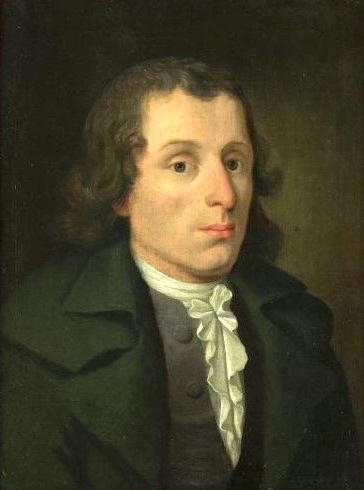

Christian Gottlob Neefe
1748 — 1798
Christian Gottlob Neefe was a German opera composer and conductor. He was known as one of the first teachers of Ludwig van Beethoven.
Adapted from the Wikipedia article on Christian Gottlob Neefe.
From the period sources
Christian Gottlob Neefe, born in Chemnitz in 1748, initially pursued law at Leipzig University, but his passion for music, nurtured by lessons from J. A. Hiller, ultimately led him to abandon jurisprudence for a musical career, as recorded in Biographie universelle des musiciens (1837). He began by composing operettas for the theatre and, by 1777, succeeded Hiller as conductor of the Seyler Society, a traveling orchestra that brought him recognition in the Rhine district, according to Grove’s Dictionary of Music and Musicians (1904). Neefe later settled in Bonn in 1779 as conductor for the Grossmann-Hellmuth Society, and by 1781, he was appointed court organist for Elector Max Friedrich, taking over from Van den Eeden.
It was in this capacity that Neefe became a pivotal figure in the early musical education of Ludwig van Beethoven, then a boy of ten or eleven. Neefe recognized Beethoven’s extraordinary talent, formally installing him as his organ deputy during his own absence in 1782 and appointing him cembalist for opera orchestra rehearsals in 1783, albeit without initial pay, as noted in A Biographical Dictionary of Musicians (1900). Neefe’s confidence in his pupil was evident in his assessment, quoted in A Dictionary of Music and Musicians (1879), that Beethoven played “with force and finish, reading well at sight, and… playing the greater part of Bach’s Well-tempered Clavier,” concluding that “This young genius deserves some assistance that he may travel. If he goes on as he has begun, he will certainly become a second Mozart.” Neefe also published some of Beethoven’s earliest compositions, including three piano sonatas and variations on a Dressler march, in 1783, according to A History of Pianoforte-Playing and Pianoforte-Literature (1897). Despite his own prolific output of operas, church music, and instrumental works, Neefe is “only now remembered as the early instructor of Beethoven,” as Biographical Dictionary of Musicians (1886) observes. His career was marked by financial instability due to political changes, leading him to seek resources in teaching and eventually taking a conducting post in Dessau, where he died in 1798.