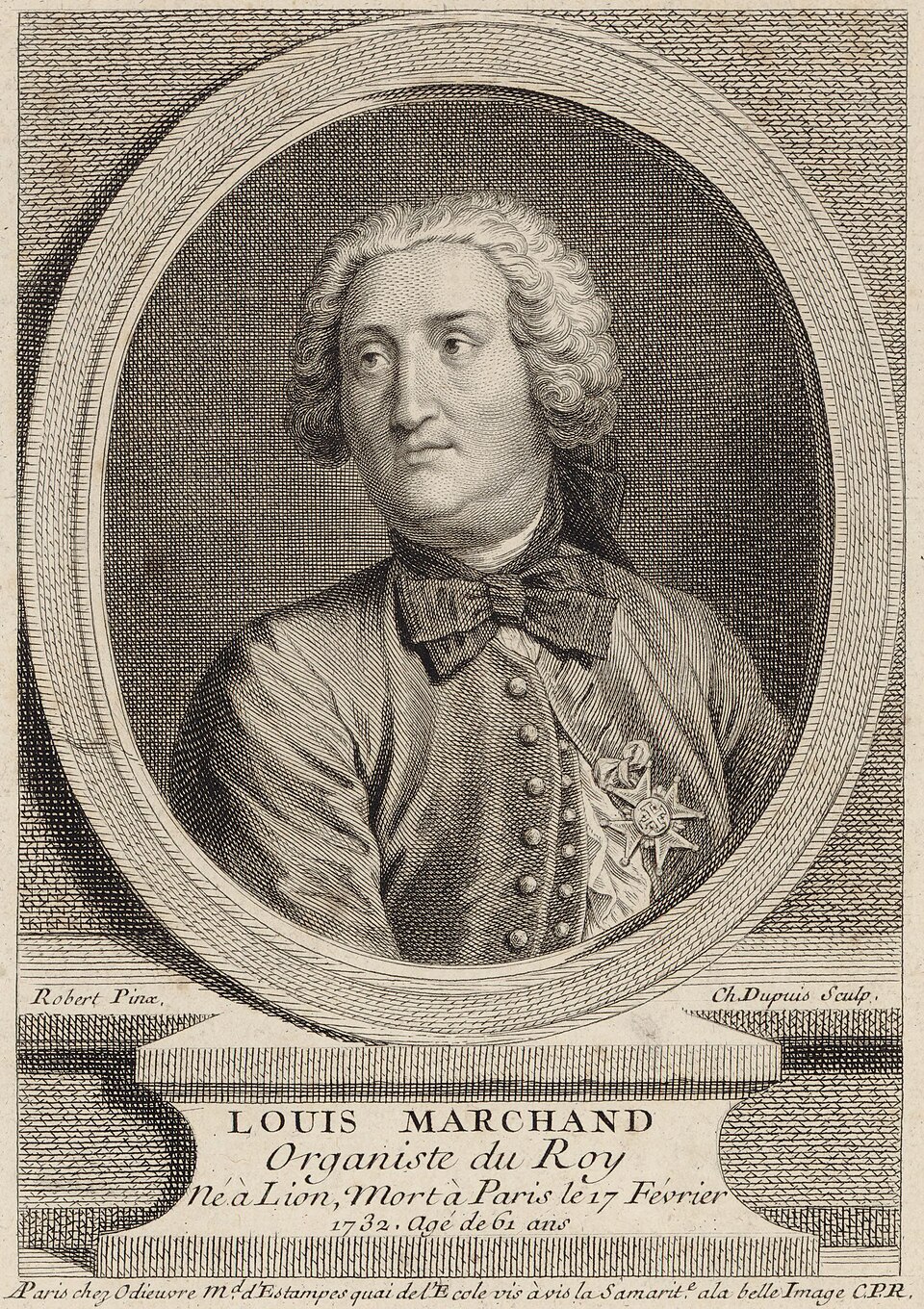
A guide to
Louis Marchand
Lyon 1669 — Paris 1732
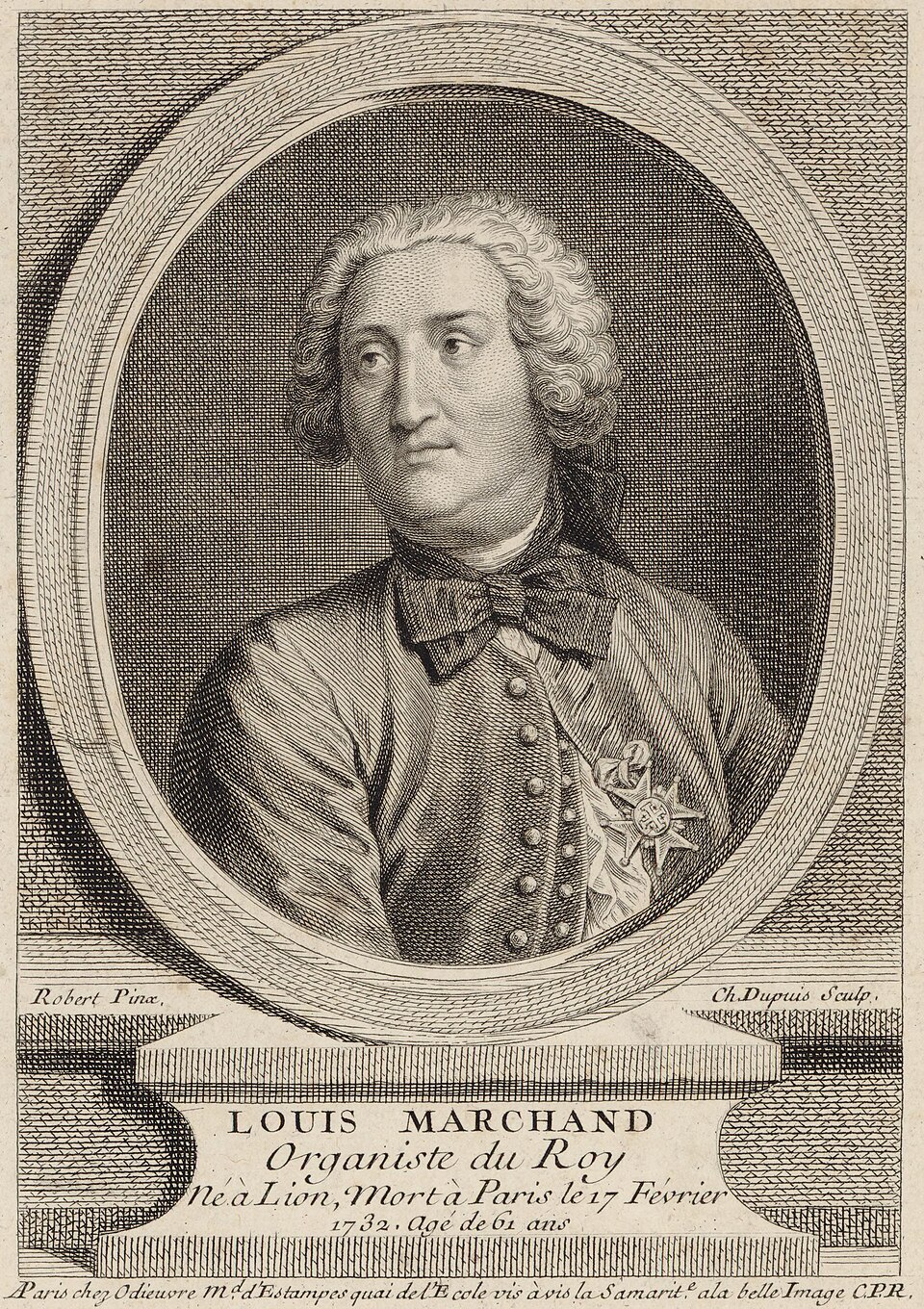
Louis Marchand was the most brilliant and most impossible figure of the French organ — a virtuoso of legendary power whose violent temper, arrogance, and gift for scandal made him as famous for his conduct as for his playing. Born in Lyon on 2 February 1669 into a family of organists, he was a child prodigy who settled in Paris around the age of twenty and rose to become, in 1708, one of the four organists to the King at the Chapelle Royale. Contemporaries lavished praise on his keyboard talent and despaired of the man; his life, as one modern summary puts it, was “filled with scandals, publicized and widely discussed both during his lifetime and after his death.”
The temper was part of the legend. When Louis XIV is said to have remarked unfavourably on Marchand’s hands, the organist — according to the eighteenth-century critic Friedrich Wilhelm Marpurg — answered with an improper retort about the King’s ears. Of one celebrated debut, the Dictionnaire des artistes (1776) reports that he was let near the organ “only after repeated requests, because they mistrusted his abilities — but scarcely had he put his hands on the keyboard than he astonished all the listeners.”
The flight from Dresden
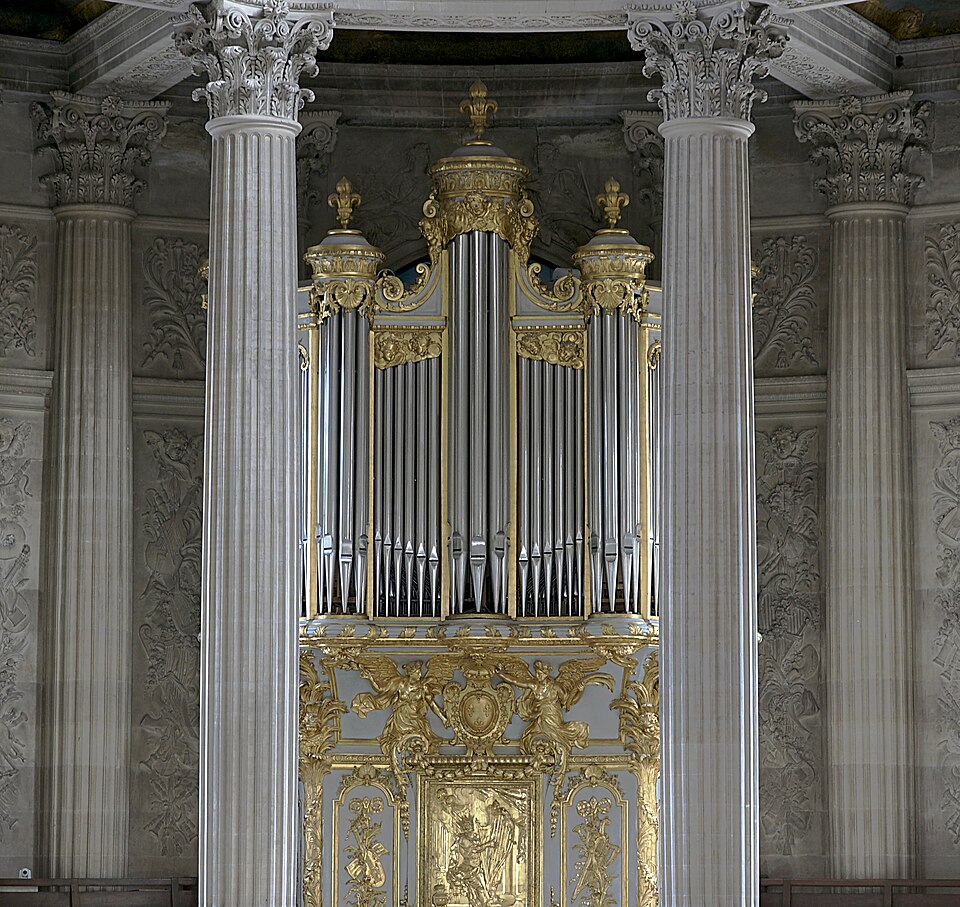
In 1713 Marchand left Paris for three years in Germany — the reasons, the records confess, are simply unknown — and it was there that the most famous story of his life took shape. In September 1717 a keyboard contest was arranged at Dresden between Marchand and Johann Sebastian Bach, then organist at Weimar. According to Bach’s biographer Johann Nikolaus Forkel (1802), when the appointed hour came and Marchand was sought at his lodgings, “it was discovered, to the astonishment of all, that he had left Dresden that morning without taking leave of anybody.” The challenger, it seemed, had fled rather than be measured against the German.
The tale should be handled with the care its sources demand. It comes entirely from the German side — Bach’s obituary of 1754, Jakob Adlung in 1758, Forkel half a century after the event — and, as Forkel’s editors note, none of its tellers were present, nor does the story appear in any French document. Modern scholars treat it as embellished, even mythologised. What is better attested is the mutual regard underneath it: Adlung records that Bach played Marchand’s own harpsichord suites “ingeniously,” from memory.
The vanished virtuoso
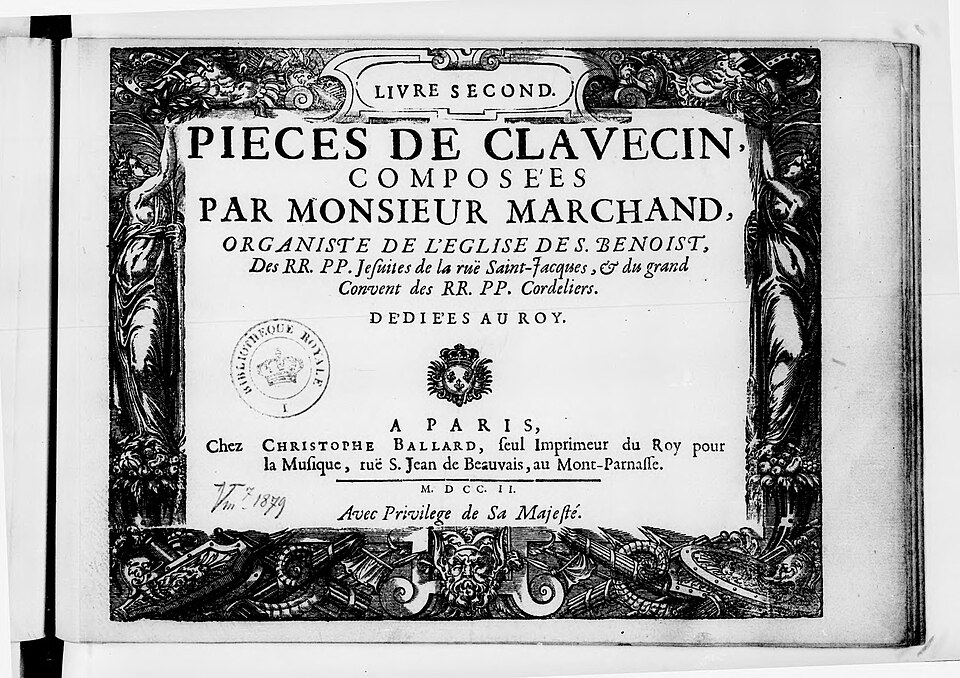
For all his fame, “comparatively few works by Marchand survive, most of them dating from the early stages of his career.” Two books of Pièces de clavecin appeared in Paris — the first in 1699, the second from Ballard in 1702, dedicated to the King. His organ pieces fared worse: an original print of around 1700 is entirely lost, and the music comes down chiefly through a manuscript once kept in the royal library at Versailles. Yet what survives is enough to justify the legend. The towering Grand Dialogue in C (1696) and the grave Fond d’orgue are “lauded as classic works of the French organ school” — the genuine residue of a player whose reputation needed no print to spread.
His influence ran on through others. The young Rameau’s first harpsichord book, of 1706, openly follows Marchand’s manner, beginning, as Marchand’s did, with an unmeasured prelude; and Marchand’s pupil Louis-Claude Daquin succeeded him, on his death, at the organ of the Cordeliers. The harpsichordist’s son Pierre-Louis d’Aquin later weighed him against François Couperin: Couperin, he allowed, had more art and application — but Marchand had “a more natural, spontaneous musicianship.”
He died in Paris on 17 February 1732, aged sixty-three. He left a treatise, two slim books of clavecin pieces, a handful of organ works, and a great deal of story — the proudest, stormiest, most thoroughly remembered organist of his France, whose surviving notes are fewer than his anecdotes.