A guide to
Vincent Lübeck
Padingbüttel 1654 — Hamburg 1740
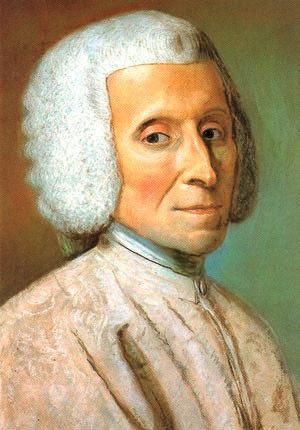
Vincent Lübeck lived to be nearly eighty-six and held two of the most coveted organ posts in northern Germany, the second of them for almost forty years at one of the largest organs in the world. He belonged to the same great generation as Buxtehude and Reincken, and his surviving organ music — virtuosic, full of daring pedal writing — sits squarely in their North German tradition. Comparatively little of it has come down to us, but what has marks him as one of the finest organists of the age.
He was born in Padingbüttel, near the North Sea coast north of Bremen, around September 1654. In 1675 he became organist of St Cosmae et Damiani in Stade, whose fine Arp Schnitger organ still survives, and on taking the post he married the daughter of his predecessor. He stayed at Stade for twenty-seven years before the grand prize came: in 1702 he was appointed organist of St Nikolai in Hamburg.
The great Hamburg organ
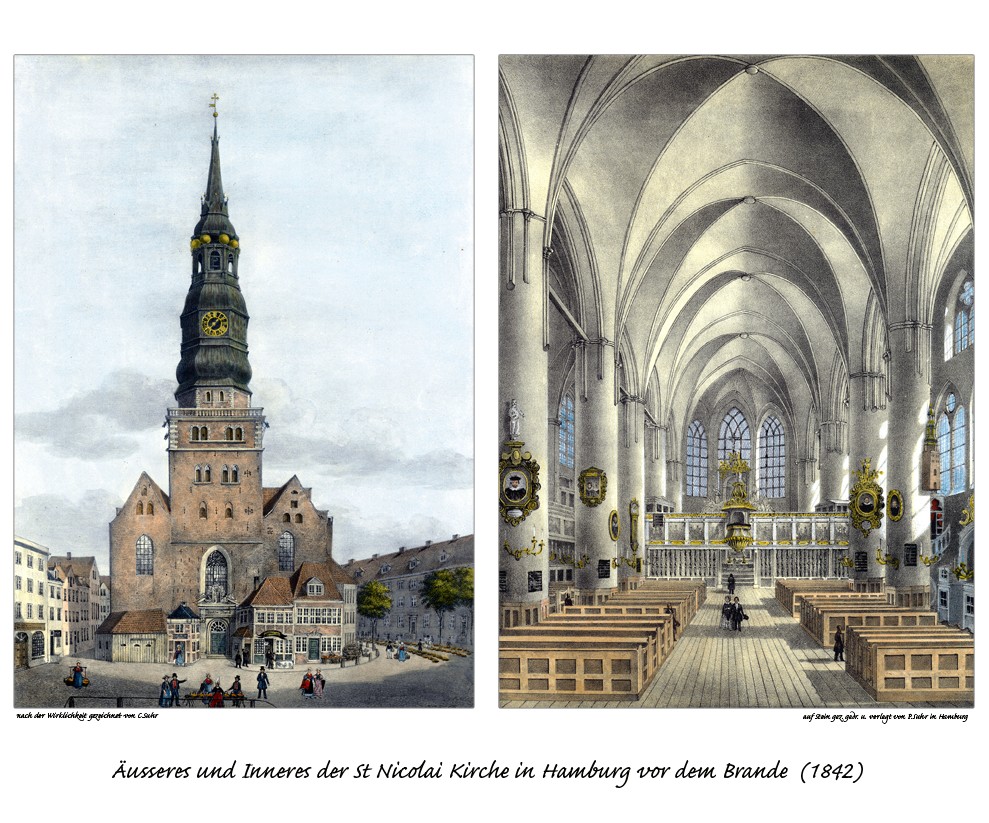
The St Nikolai instrument was a colossus — a four-manual Schnitger organ of around sixty-seven stops, one of the largest of its time. Lübeck commanded it for nearly four decades, and his free organ works, with their five-voice textures, hand-crossings and demanding pedal lines, are written by and for a master of exactly such an instrument. He was also, on the strength of his long association with Schnitger, a much sought-after organ examiner, called in to judge new instruments across the north.
His reputation in his own lifetime was unusually high. Johann Mattheson, surveying the leading musicians of the day in 1721, dispensed with description altogether: “But how to extol someone who is already greatly renowned? I need only give his name, Vincent Lübeck” — and pronounced both organ and organist “extraordinary.”
The surviving music
For so long and distinguished a career, the surviving output is slim. There are the free praeambula and fugues — preludes in C, C minor, D minor, E major and G minor — and two chorale works on a larger scale: the chorale fantasia Ich ruf zu dir, Herr Jesu Christ and the setting Nun lasst uns Gott dem Herren. From late in his life comes the Clavier Übung of 1728, a published collection of harpsichord music — a G-minor suite crowned by a chaconne — that should not be confused with Bach’s famous series of the same name.
Lübeck’s longevity bridged the generations. He outlived Buxtehude by more than thirty years and was still at St Nikolai when Bach was at the height of his Leipzig career; Bach may well have known his music, though the two almost certainly never met. From 1735 his son Vincent the Younger assisted him, and on his death succeeded him at the great Hamburg organ. He died in Hamburg on 9 February 1740, in his mid-eighties, the grand old man of the North German organ school — and the church and instrument that had been his life’s stage perished a century later, in the Great Fire of 1842.