A guide to
Johann Kuhnau
Geising, Saxony 1660 — Leipzig 1722
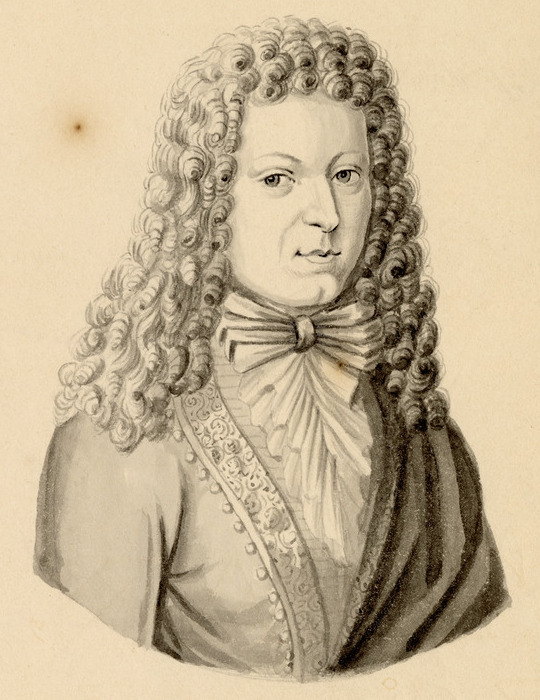
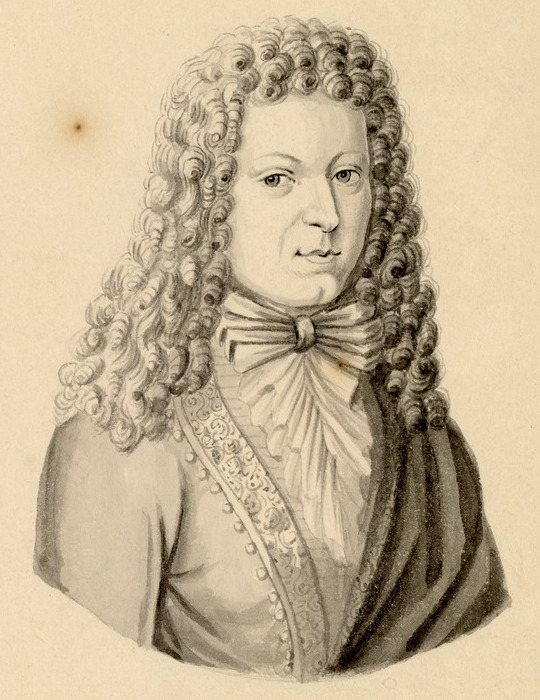
Johann Kuhnau was the man whose chair Bach inherited. For twenty-one years he was Thomaskantor in Leipzig, the post J. S. Bach took up the year after his death — and he was, by any measure, one of the most remarkable polymaths of the German Baroque: composer, organist, lawyer, novelist, translator and music theorist, who somehow managed all of these at once. His music survives only in part, much of it lost, but the keyboard works that remain mark him as a genuine pioneer, above all for the Biblical Sonatas of 1700, the first celebrated essay in keyboard storytelling.
He was born in Geising, in the Saxon Ore Mountains, on 6 April 1660. Sent as a boy to Dresden to study with court musicians, he learned keyboard, composition, French and Italian; the Great Plague drove him home, and he completed his schooling at the Johanneum in Zittau. In 1684, still only twenty-four, he was appointed organist of the Thomaskirche in Leipzig — and, characteristically, used the leisure of the post to take a law degree, finishing his dissertation in 1688 and practising as an advocate while continuing to compose.
The first German keyboard sonatas
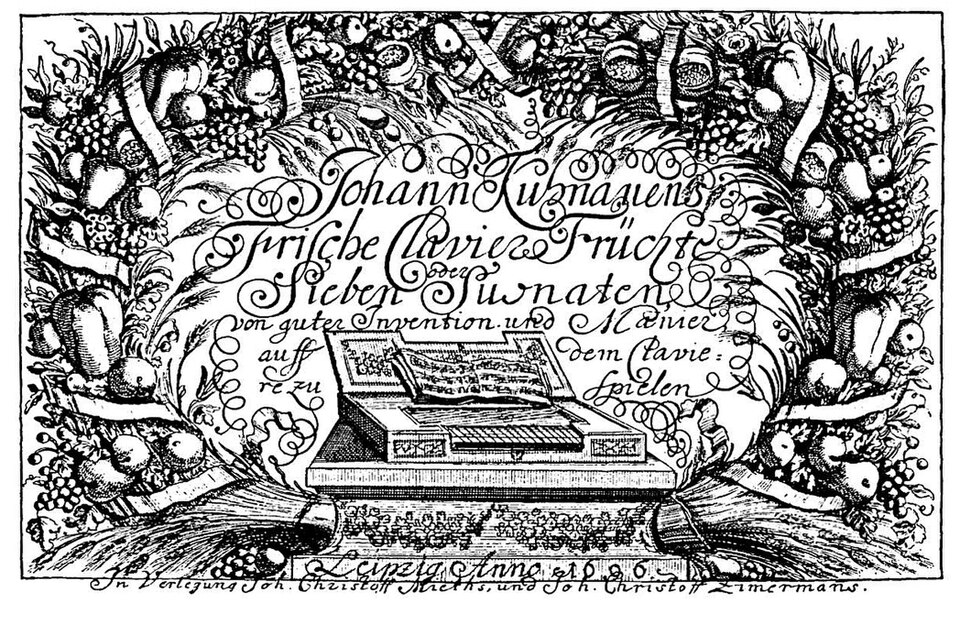
Kuhnau’s keyboard music came out in a steady stream of publications. The Neue Clavier-Übung appeared in two parts (1689 and 1692) — seven suites in major keys, then seven in minor — and the second part closed with a sonata in B flat reckoned the first keyboard sonata published in Germany. Kuhnau defended the novelty plainly: “Why shouldn’t one provide such pieces for keyboard which are provided for other instruments?” The Frische Clavier-Früchte of 1696 followed with seven more sonatas on the Italian chamber model; it was reprinted five times. The American chroniclers Milton Cross and David Ewen later called it “one of the earliest attempts to write seriously for a keyboard instrument other than the organ.”
The Biblical Sonatas
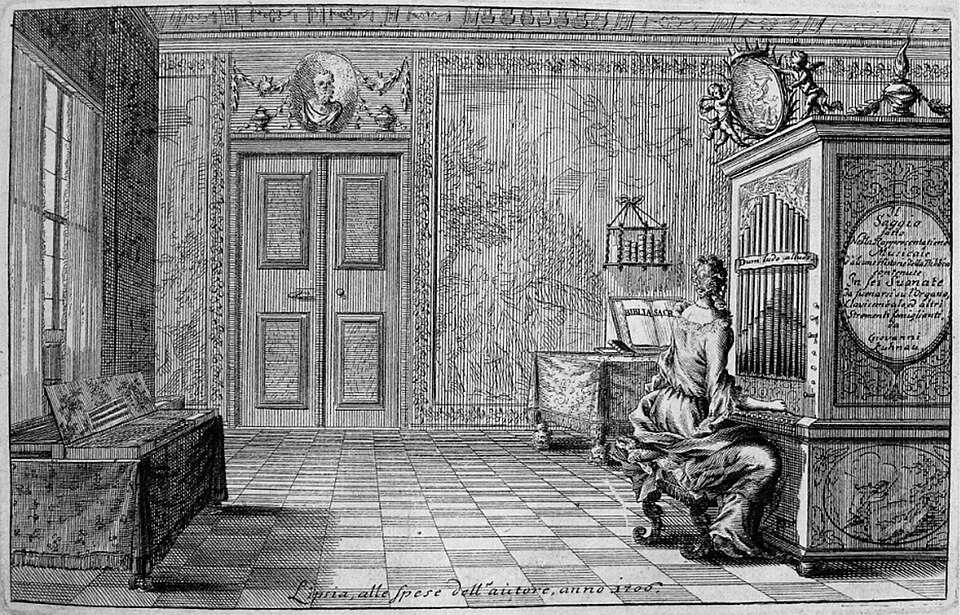
His masterpiece is the Musicalische Vorstellung einiger biblischer Historien of 1700 — six keyboard sonatas, each one a Bible story told in sound. The first depicts The Combat between David and Goliath; others portray Saul’s melancholy cured through music, Jacob’s Wedding, Hezekiah’s sickness and recovery, Gideon and Jacob’s death and burial. Kuhnau wove in quotations of Lutheran chorales — Luther’s Aus tiefer Not schrei ich zu dir among them — and imitations of operatic arias, and prefaced the set with a substantial essay defending program music. They remain the works on which his fame rests.
The same year he published a satirical novel, Der musicalische Quack-Salber (The Musical Quack), following one Caraffa, a German charlatan who tries to make his name by posing as an Italian virtuoso — a book that has since proved a singularly valuable source for late-seventeenth-century performance practice.
Kantor of St Thomas
In 1701 Kuhnau succeeded Johann Schelle as Thomaskantor, the directorship of music for Leipzig’s principal churches, and held it until he died. The post was, in Willi Apel’s words, “as vexatious and difficult for him as for his successor, J. S. Bach” — Kuhnau battled ill health and the manoeuvres of rivals, among them the young Telemann, who ran a competing musical life in the city, and his own pupil Johann Friedrich Fasch. His students included Fasch, Johann David Heinichen and Christoph Graupner. Much of his sacred output — an opera Orpheus, a St Mark Passion, a three-choir Te Deum, masses and cantatas — is lost; the Christmas cantata long catalogued as Bach’s BWV 142 is now thought to be his.
He died in Leipzig on 5 June 1722. The following year the council, having first courted Telemann and Graupner, settled on Bach for the vacant Kantorate. Kuhnau is remembered now not as a footnote to that succession but as the man who first taught the German keyboard to tell a story.