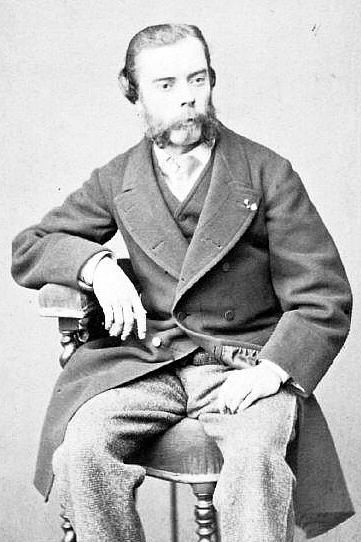

Eugène Ketterer
1831 — 1870
Eugène Ketterer was a prolific French composer and pianist who was known for his numerous salon arrangements of contemporary opera arias.
Adapted from the Wikipedia article on Eugène Ketterer.
From the period sources
Eugène Ketterer, a French pianist and composer, was born in Rouen in 1831 and died in Paris in December 1870. A pupil of the Paris Conservatoire, he studied under Marmontel, obtaining a second prize for solfège in 1847 and a premier accessit in 1852, according to Grove’s Dictionary (1906). From that time until his death, which occurred during the siege of Paris, Ketterer “appeared constantly as a pianist” and published a prolific output of piano music.
Ketterer was known as a “favourite drawing-room composer” (Dictionary of Music, 1896), publishing some 290 to 300 pieces in this style, many of which achieved considerable popularity. While Grove’s Dictionary (1906) notes their “immense and ephemeral popularity” and “essentially trivial quality,” Brown’s Biographical Dictionary (1886) describes the majority of his works as “of a graceful character, brilliant at times, but never vulgarly showy.” Notable examples include his Grand caprice hongrois, Op. 7, l’Argentine, Op. 21, and La Chatelaine, Op. 90, as listed in A Biographical Dictionary of Musicians (1900). He also collaborated with Constant Hermann on “12 Duos concertants pour piano et violon, sur des opéras de Verdi,” according to Biographie universelle des musiciens (1880).