A guide to
Johann Caspar Kerll
Adorf, Saxony 1627 — Munich 1693
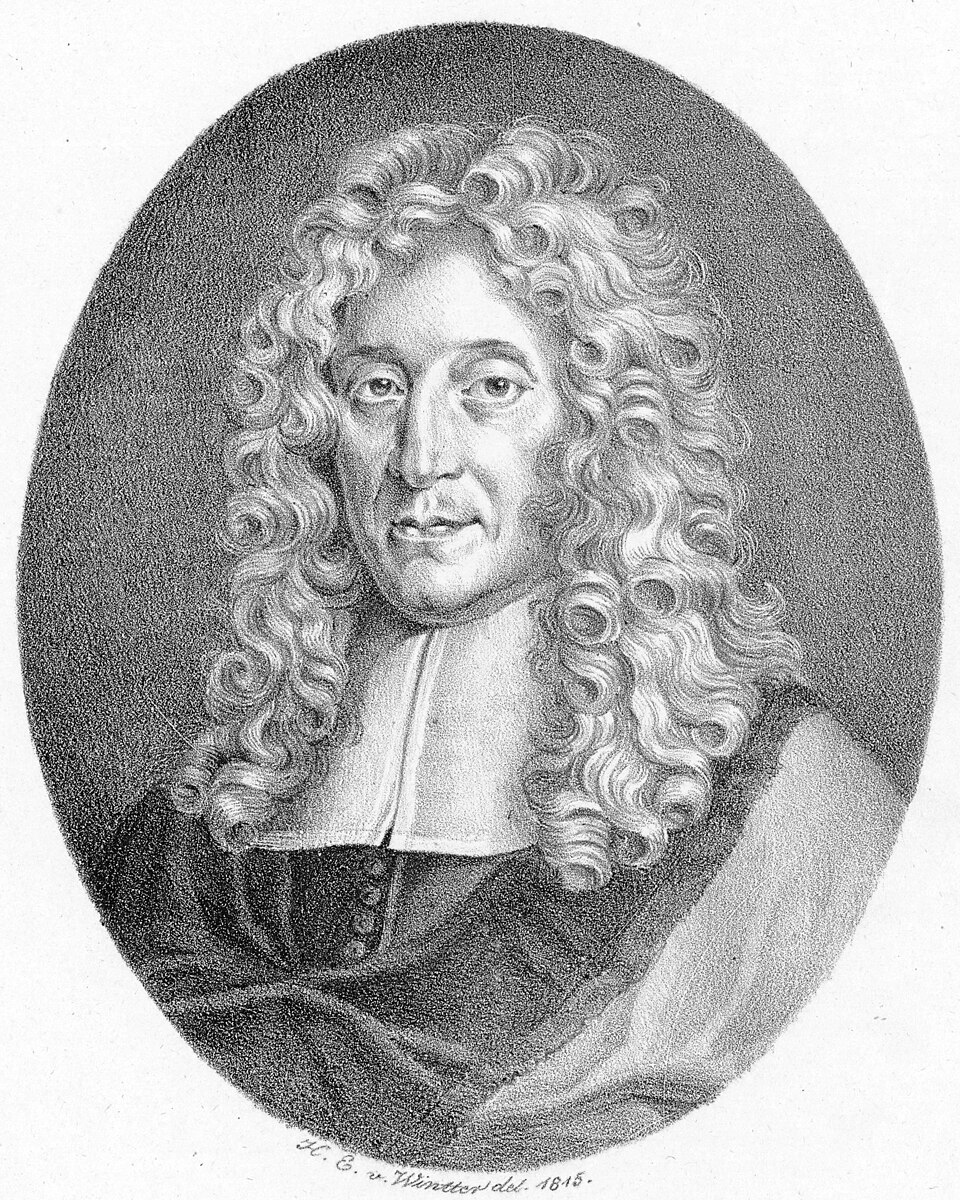
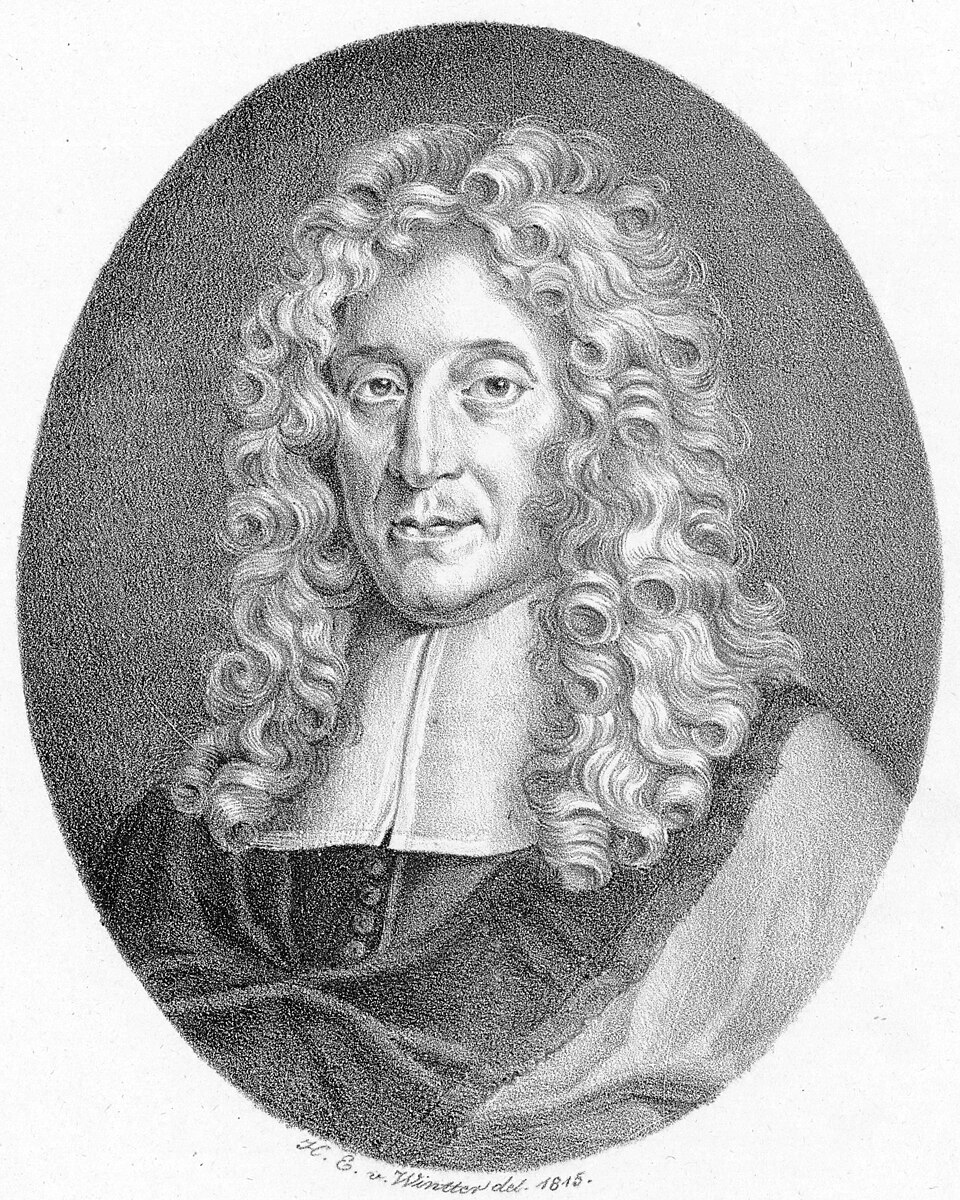
Johann Caspar Kerll was one of the great cosmopolitan musicians of the German Baroque — a Catholic, southern counterweight to the Lutheran organists of the north, and a composer whose keyboard music J. S. Bach and George Frideric Handel both knew well enough to borrow. He was born on 9 April 1627 in Adorf, in the Electorate of Saxony, the son of an organist, and rose to direct music at two of the most brilliant courts in the Empire, Munich and Vienna.
His training was Italian to the core. Around 1648 he was sent to Rome, where he studied with Giacomo Carissimi and absorbed the keyboard tradition of Frescobaldi’s circle — possibly alongside Froberger, the other great German who passed through Rome in those years. That Roman schooling gave Kerll a polish and a contrapuntal ease that set him apart from his German contemporaries.
Munich and Vienna
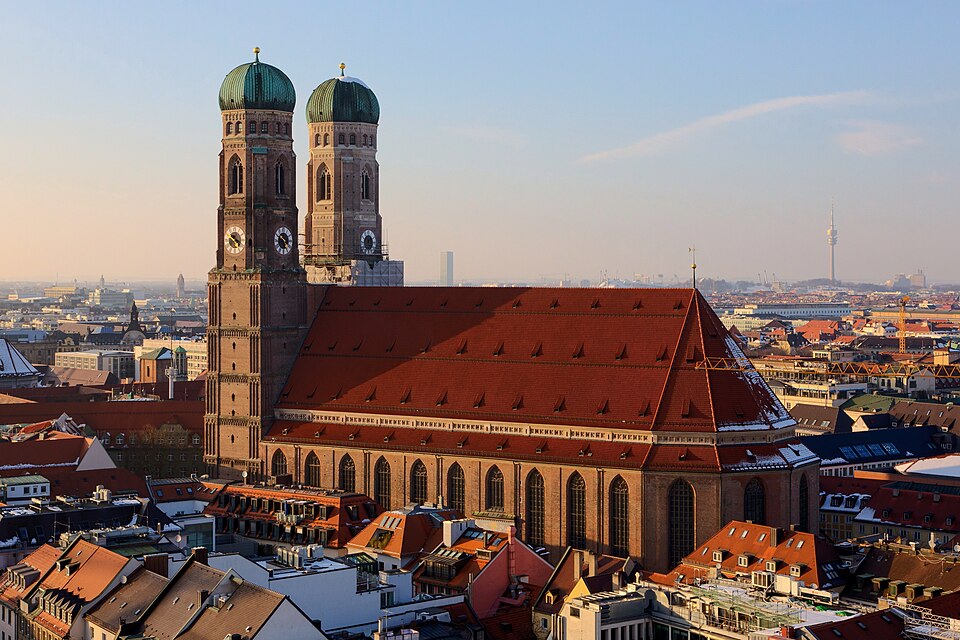
In 1656 Kerll was appointed court Kapellmeister at Munich, in the service of the Bavarian Elector. The following year, 1657, his opera Oronte inaugurated the new Munich opera house — Kerll was a celebrated opera composer in his day, though almost all of those eleven operas are now lost. In 1664 he was ennobled by Emperor Leopold I, a measure of the regard in which he was held.
Around 1674 he moved to Vienna, where he became one of the court organists and, in time, organist at St Stephen’s Cathedral. His pupils are said to have included Agostino Steffani and Franz Xaver Murschhauser, and he may have taught the young Johann Pachelbel. After surviving the Vienna plague of 1679, which took his wife, and the Turkish siege of 1683, he returned at last to Munich, where he died on 13 February 1693.
The music that travelled
Kerll’s surviving keyboard music is the best place to meet him: a set of toccatas answering the eight church modes, canzonas, dance suites, a ciacona, and the descriptive showpieces for which he is best remembered — the Capriccio sopra il cucu, built on the cuckoo’s two-note call, and the Battaglia, a two-hundred-bar battle piece. His liturgical organ music was gathered in the Modulatio Organica of 1686, a collection of Magnificat versets on the church modes.
What seals his place in history is how widely that music travelled. Handel drew themes and fragments from Kerll repeatedly — the chorus Let all the angels of God in Messiah reworks material from one of Kerll’s canzonas — and Bach thought enough of Kerll’s Missa superba to arrange its Sanctus for his own use in Leipzig (catalogued as BWV 241). A Saxon organist trained in Rome, working for Bavarian and Austrian Catholic courts, thus fed directly into the two summits of the German Baroque. Few composers of his generation reached so far in so many directions.