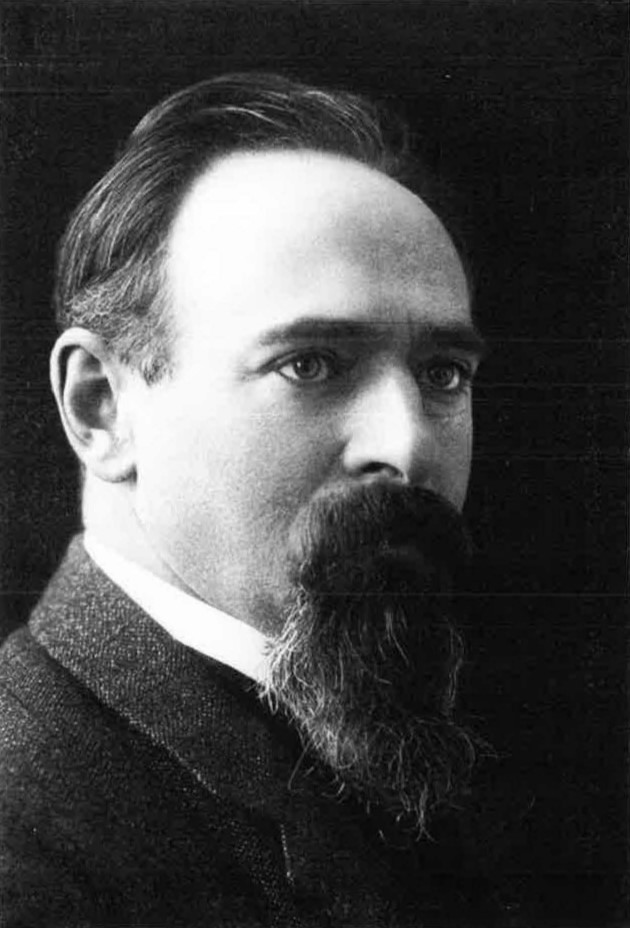

Paul Juon
1872 — 1940
Paul Juon was a Russian composer of Swiss origin.
Adapted from the Wikipedia article on Paul Juon.
From the period sources
Paul Juon, born in Moscow in 1872, received a thorough musical education, studying violin under Hrimaly and composition with Taneieff and Arensky at the Moscow Conservatoire. He then completed his studies in Berlin at the Hochschule under Woldemar Bargiel, where he was awarded the Mendelssohn scholarship, according to Grove’s Dictionary (1906). After a brief tenure teaching theory at the Baku Conservatoire, Juon settled in Berlin in 1897. He enjoyed the “good fortune to attract the attention of Herr Lienau, head of the publishing house of Schlesinger,” which published his early works (Grove’s Dictionary, 1906). His style, as described by Grove’s Dictionary (1906), presented “an interesting blend of Russian and German,” with “Slav in character” material treated with a “thoroughly German” approach, leaning towards Brahms and other German chamber music composers. His second symphony, Op. 23, was produced in January 1903 at Meiningen, where it received a “flattering reception from that highly critical audience” (Grove’s Dictionary, 1906). Juon also contributed to musical scholarship, publishing a “Prakt. Harmonielehre” and a German translation of Modest Tchaikovsky’s biography of his brother (A Biographical Dictionary of Musicians, 1905; Dictionary of Music, 1908). His chamber works, including a piano sextet, string quintet, and violin and viola sonatas, were introduced in America by the Margulies Trio, which performed works by Juon and others (Grove’s American Supplement, 1920). American composer Bainbridge Crist also studied composition under Juon in Berlin (Grove’s American Supplement, 1920; The New Encyclopedia of Music and Musicians, 1924).