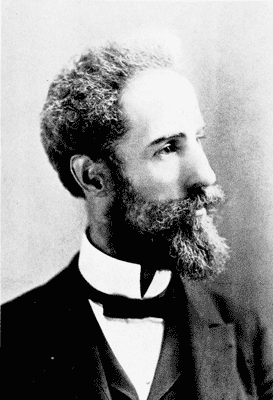

Frederic Grant Gleason
1848 — 1903
Frederick Grant Gleason was an American composer, and director of the Chicago Conservatory from 1900 to 1903.
Adapted from the Wikipedia article on Frederick Grant Gleason.
From the period sources
Frederic Grant Gleason, an American composer, pianist, and teacher, received extensive training both at home and abroad. He studied with Dudley Buck in Hartford, then at the Leipzig Conservatory in 1869 under figures like Moscheles, Richter, Plaidy, and Lobe, before continuing his studies in Berlin with Loeschhorn, Weitzmann, and Haupt, and later piano lessons with Beringer in London (A Biographical Dictionary of Musicians, 1900). Originally intended for the ministry, Gleason’s “musical proclivities ultimately resulted in his admission to the guild of tuneful brethren,” according to Brown’s Biographical Dictionary (1886).
Upon his return to America, Gleason held organist positions in Hartford and New Britain, Connecticut, before moving to Chicago in 1877. There, he became a prominent teacher of piano, organ, composition, and orchestration at the Hershey School of Music, and was described as a “valued and much-sought teacher” (A Biographical Dictionary of Musicians, 1900). He was also active in musical organizations, serving as examiner, director, and fellow of the American College of Musicians by 1884, president of the Chicago Manuscript Society in 1896, and president-general of the American Patriotic Musical League in 1897 (A Biographical Dictionary of Musicians, 1900). Gleason was esteemed in America as a composer of several romantic operas, orchestral, and chamber music (Dictionary of Music, 1896). His grand romantic operas, Otho Visconti and Montezuma, for which he wrote both text and music, remained in manuscript, though the overture to Otho Visconti was performed in Leipzig in 1892 (A Biographical Dictionary of Musicians, 1900). Famous Composers and Their Works (1891) noted that his operas had “met the fate thus far accorded to those of one of the most industrious and capable musicians of the West,” with excerpts “repeatedly been played in concert form by Mr. Thomas and others.” Grove’s Dictionary (1906) observed that his compositions were “marked rather by ambition and extravagance than any potent musical impulse.”