A guide to
Johann Caspar Ferdinand Fischer
Schönfeld, Bohemia 1656 — Rastatt 1746
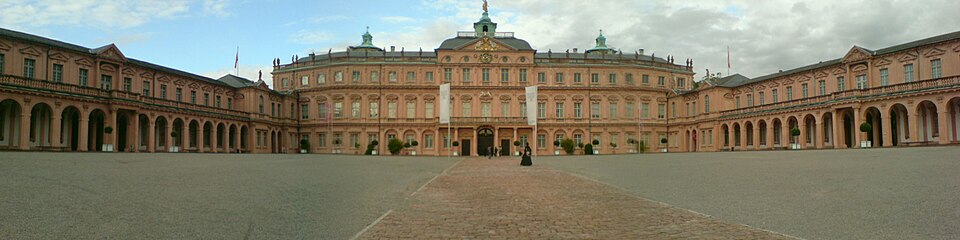
Johann Caspar Ferdinand Fischer was the composer who first led German keyboard music systematically through all the keys — and so, quietly, prepared the ground for Bach’s Well-Tempered Clavier. He spent his career as Kapellmeister to the Margraves of Baden, and though his surviving music is small and rarely played, Johann Nikolaus Forkel, Bach’s first biographer, ranked him “as one of the best composers for keyboard of his day.” No portrait of him survives; the Baden residence at Rastatt, where he worked, still stands.
He was born around 1656 in Schönfeld (Czech Krásno nad Teplou), in Bohemia. His early life is almost a blank, but by 1695 he is documented as Kapellmeister to Margrave Ludwig Wilhelm of Baden — the famous “Türkenlouis” of the wars against the Ottomans — and he seems to have remained in the family’s service, following the court to its new Baroque seat at Rastatt, until the end of his long life.
The French style, naturalised
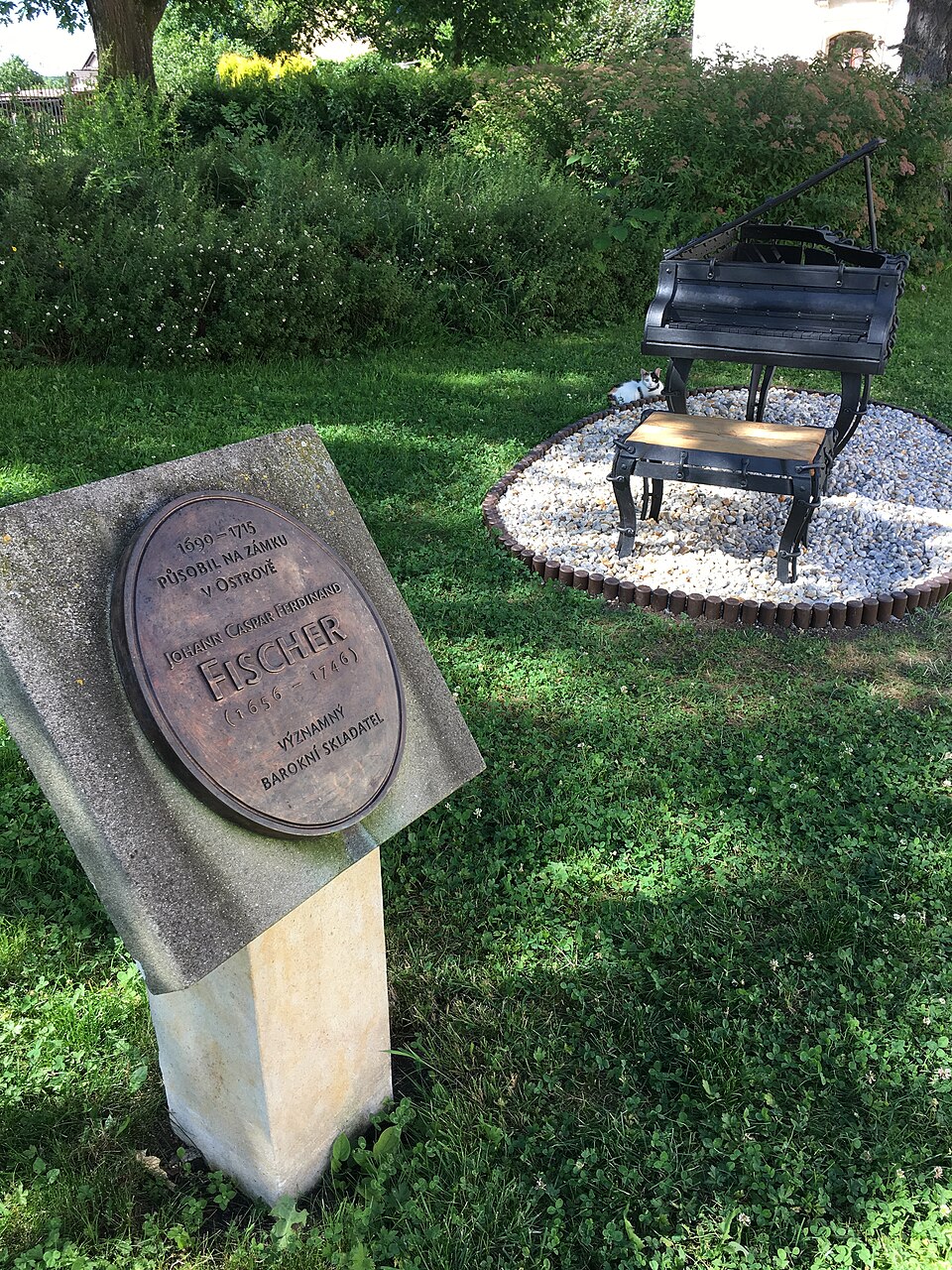
Fischer’s importance is first of all as an importer. Through the influence of Jean-Baptiste Lully, whose orchestral style had conquered Europe, he brought the French Baroque into German keyboard music — taking the model of Froberger and updating it, and pioneering the application of the orchestral suite to the harpsichord. His Musicalisches Blumen-Büschlein of 1698 lays out suites of prelude and stylised dances in the French taste, and the late Musicalischer Parnassus (c. 1738) crowns the line with nine suites each named after a Muse — Clio, Calliope, Melpomene and the rest — a graceful fusion of the German and French manners.
Ariadne’s thread
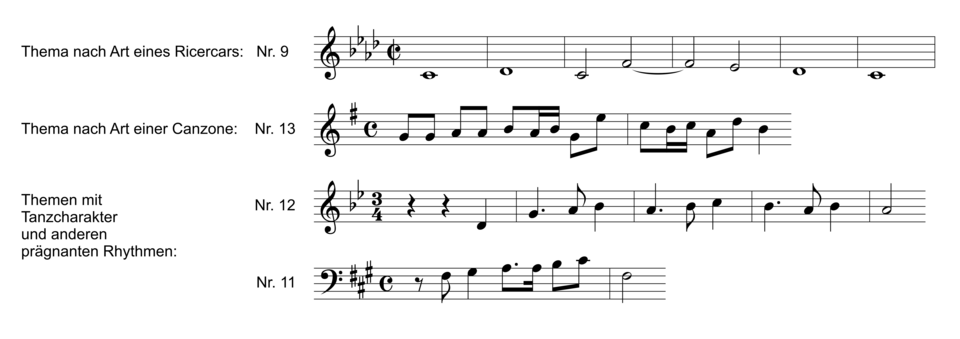
His single most influential work is the Ariadne Musica of 1702 — twenty paired preludes and fugues carrying the player through nineteen different keys, with one in the Phrygian mode. The title is the key to the idea: Ariadne’s thread, drawn through the labyrinth of tonality itself, two decades before the new tuning systems made every key freely available. The collection is the most celebrated direct ancestor of Bach’s Well-Tempered Clavier — and Bach did not merely know it in the abstract. Several of his own fugue subjects can be traced to Fischer’s themes, reworked and expanded. What Fischer sketched in miniature, Bach built into a cathedral.
A long, quiet eminence
Fischer lived to be roughly ninety, dying at Rastatt on 27 August 1746, a contemporary of Bach who outlived most of his own generation. His music never achieved wide circulation — surviving copies are rare, which is the chief reason it is so little heard now — but its quality was recognised by those who mattered. To stand behind both the suite and the prelude-and-fugue cycle as they passed into Bach’s hands is a substantial legacy for so retiring a master, working out his career in the service of a margravial court on the Upper Rhine.