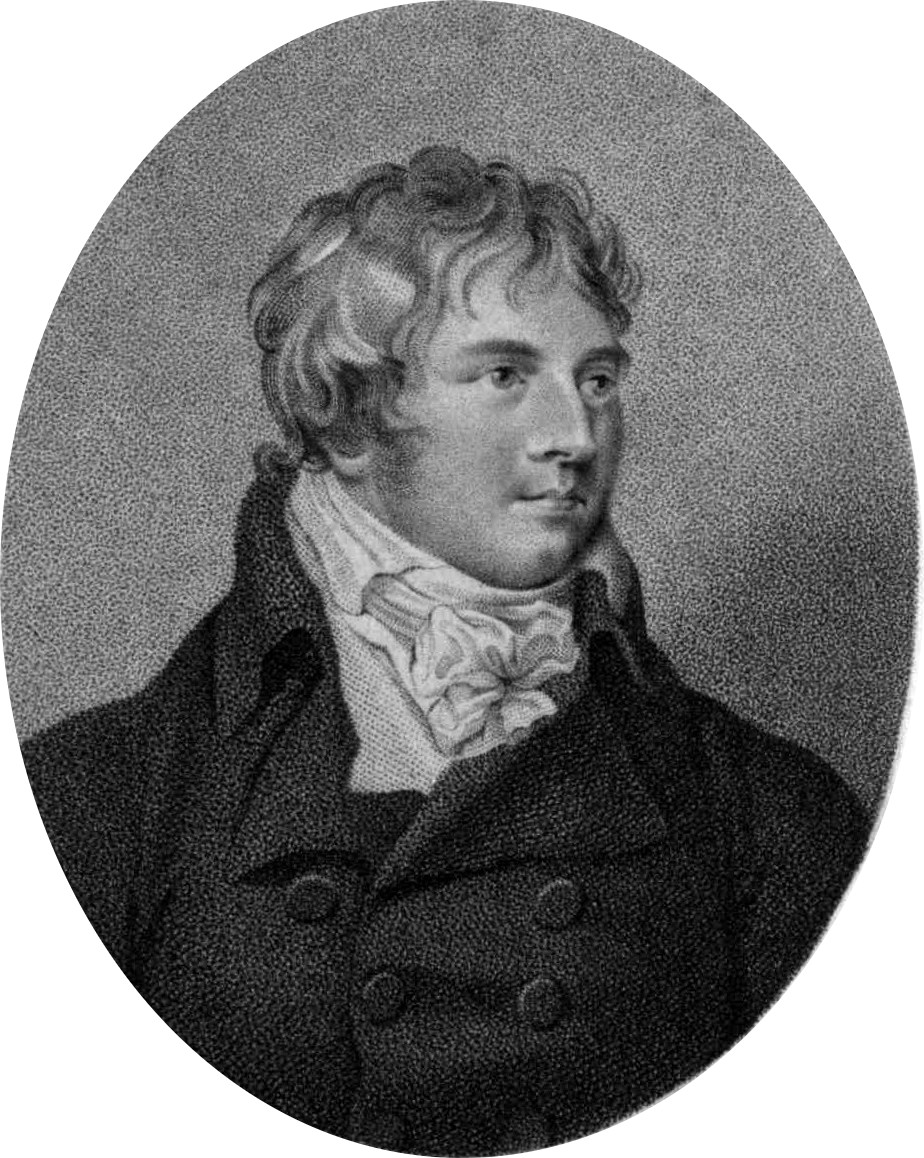

Jan Ladislav Dussek
1760 — 1812
Jan Ladislav Dussek was a Czech classical period composer and virtuoso pianist. He was an important representative of Czech music abroad in the second half of the 18th century and the beginning of the 19th century. Some of his more forward-looking piano works have traits often associated with Romanticism.
Adapted from the Wikipedia article on Jan Ladislav Dussek.
From the period sources
Jan Ladislav Dussek, a pioneer among Bohemian and Polish musicians, cultivated a distinctive “national” flavor in his piano compositions, which, according to A Biographical Dictionary of Musicians (1900), still keeps them alive. His early musical education began as a boy-soprano at the Minorite church in Iglau, where Father Spenar taught him music while he attended the Jesuit college. Later, while studying theology at Prague University, Dussek pursued thorough musical training, leading to an organist post in Mechlin through his patron, Count Manner. His travels brought him to Hamburg in 1783, where he studied under C. Ph. E. Bach, and he later gained renown as a pianist and performer on Hessel’s “harmonica” in Berlin and St. Petersburg.
Dussek’s career saw him serve Prince Radziwill in Lithuania and play before Marie Antoinette in Paris in 1786. Driven to London by the Revolution, he married singer Sofia Corri in 1792 and, with his father-in-law, Domenico Corri, founded a music business. However, this venture failed, as his “careless habits, and love of luxury and ease, ill fitted him for commercial pursuits,” leading him to flee to Hamburg in 1800 to escape creditors, as A Biographical Dictionary of Musicians (1905) records. He later served Prince Louis Ferdinand of Prussia, to whom his Elegie harmonique, op. 61, is dedicated, and eventually Prince Talleyrand in Paris. As an executant, Dussek was considered “sui generis,” disputing with Clementi “the honor of inventing the ‘singing-touch’.” His compositions include two English operas, though these were “given in London without much success,” a solemn mass composed at age thirteen, and several early oratorios. Notably, George Baker, an English organist, studied piano with Dussek in London, as mentioned in A Biographical Dictionary of Musicians (1900).