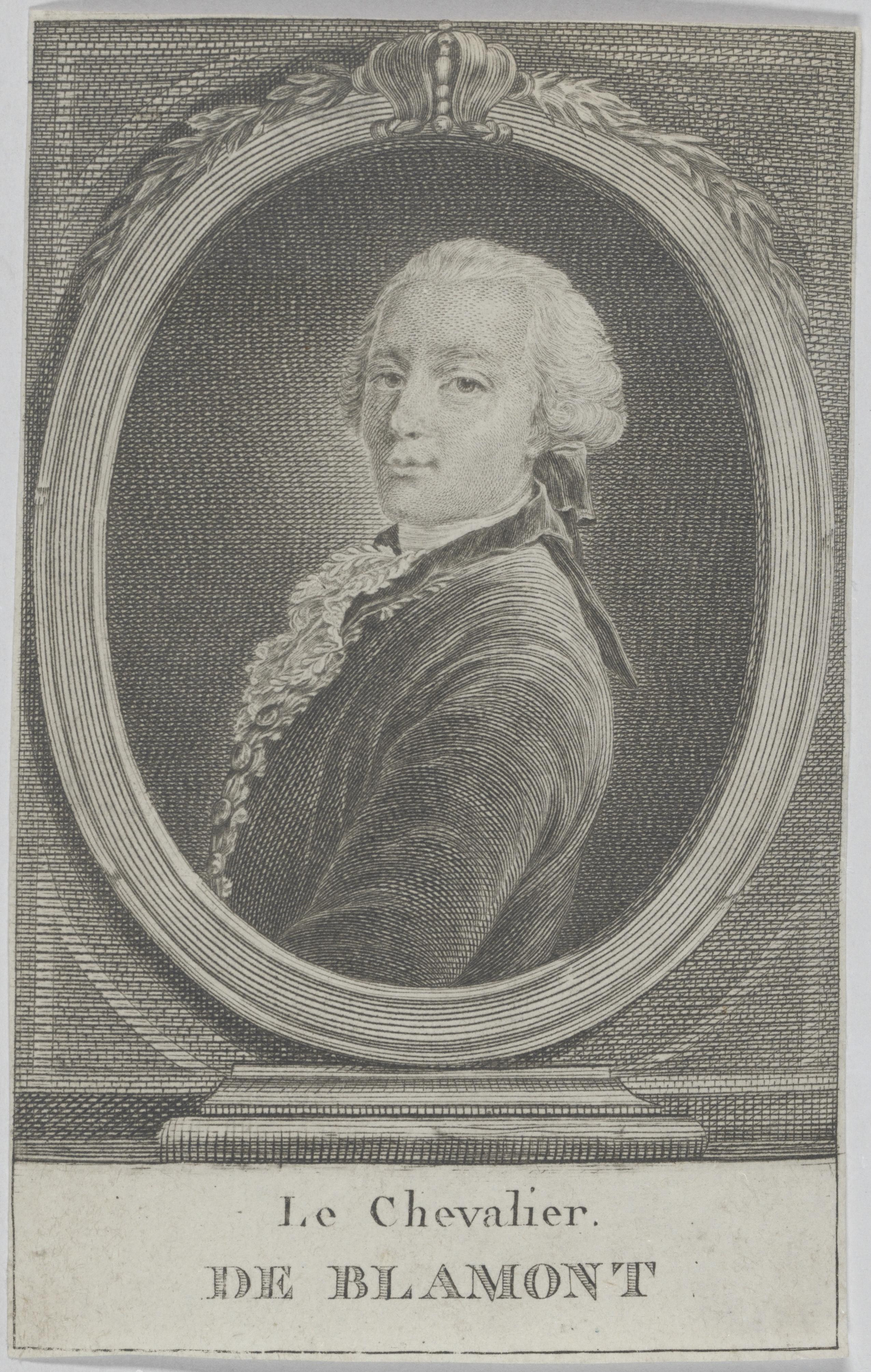

François Colin de Blamont
1690 — 1760
François Colin de Blamont was a French composer of the Baroque era.
Adapted from the Wikipedia article on François Colin de Blamont.
From the period sources
François Colin de Blamont, born in Versailles in 1690, was a significant figure in French court music, eventually becoming “superintendent of the king’s music” (A General History, 1875). His early musical education began with his father, a member of the royal band, and his cantata Circé so impressed Lalande that the older composer agreed to teach him, leading to his appointment as surintendant in 1719, and subsequent ennoblement, according to Grove’s Dictionary (1904). He was also made a chevalier of the order of St. Michael for his professional merit (A General History, 1875). Blamont composed extensively for the stage, including the operas Didon and Les Fêtes Grecques et Romaines (A General History, 1875), with the latter, an heroic ballet, establishing his reputation in 1723 (Cyclopedia of Music and Musicians, 1888). His output also included numerous court ballets and divertissements, such as Diane et Endymion (1731), Les Caractères de l’Amour (1738), and Jupiter vainqueur des Titans (1745), alongside three books of French cantatas, two books of motets, and various songs (Biographical Dictionary of Musicians, 1886; A Biographical Dictionary of Musicians, 1900).
Blamont’s influence extended to his pupils, among them Philibert Cardonne, who, at just fourteen, had a grand motet performed at court in 1745, and later became musician to the King (Cyclopedia of Music and Musicians, 1888). He also taught Bernard de Bury, his nephew, who himself became an accompanist for the king’s chamber at nineteen (Biographie universelle des musiciens, Vol. 2, 1883). In 1754, Blamont published his “Essai sur les goûts anciens et modernes de la musique française,” a treatise in which he “upholds the traditional style of operatic writing, especially as regards the libretti, against the innovations of the more advanced school” (Grove’s Dictionary, 1904). Despite his traditional stance, Blamont’s music was considered part of the established style against which the bold harmonies and novel instrumentation of Jean-Philippe Rameau were contrasted, with Rameau’s innovations reportedly astonishing “the amateurs and put[ting] to rout the imitators of Lully, such as Colasse, Desmarets, Blamont” (Famous Composers and Their Works, 1891). Blamont died in Versailles in 1760 (A Biographical Dictionary of Musicians, 1900).