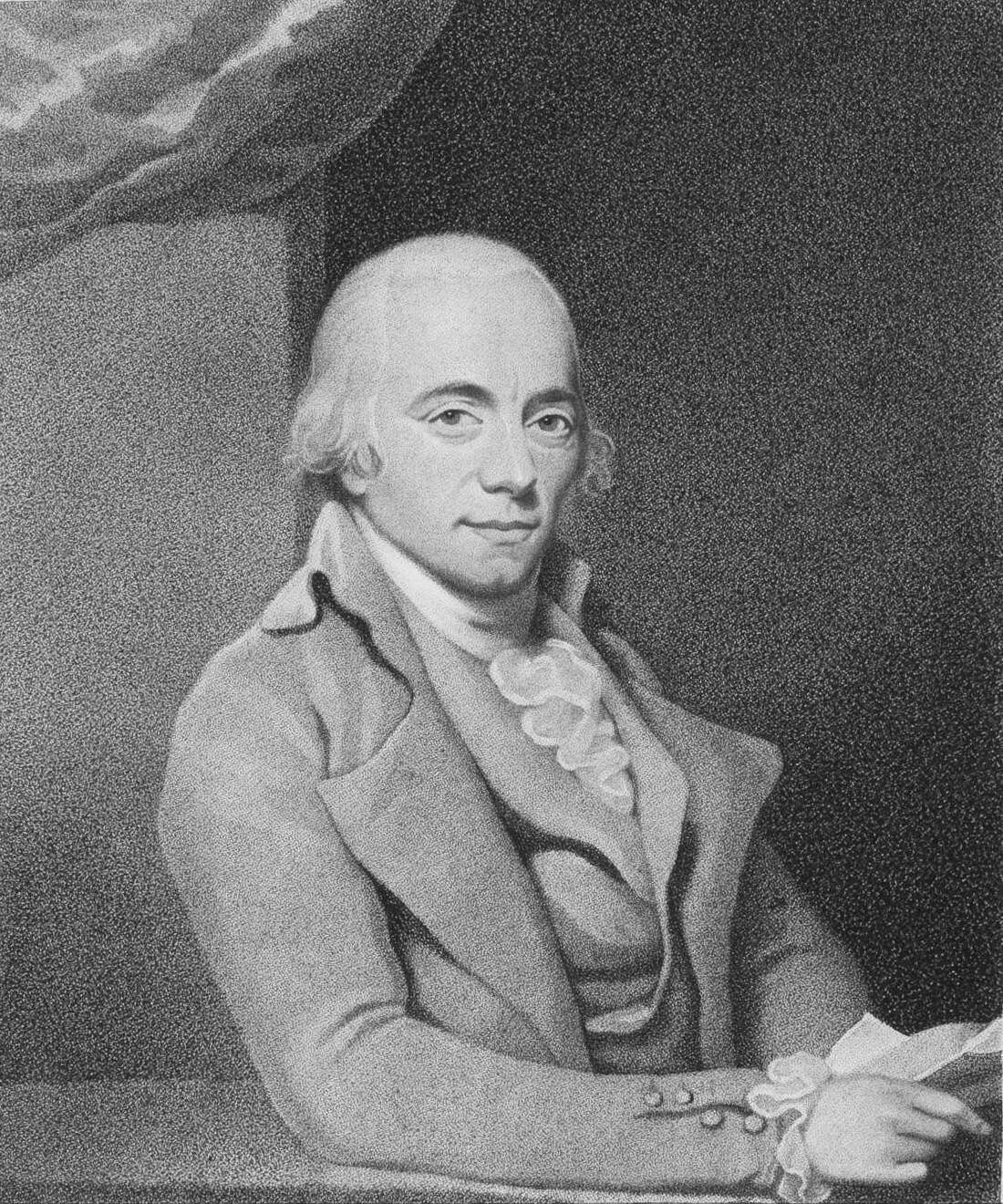

Muzio Clementi
1752 — 1832
Muzio Filippo Vincenzo Francesco Saverio Clementi was an Italian composer, virtuoso pianist, pedagogue, conductor, music publisher, editor, and piano manufacturer who was mostly active in England.
Adapted from the Wikipedia article on Muzio Clementi.
From the period sources
Muzio Clementi was a celebrated pianist and composer whose influence extended across Europe, notably through his teaching and publications. According to the Biographie universelle des musiciens (1880), he was born in Rome in 1752 to an goldsmith father who fostered his musical talent. Clementi began solfège at six, studied harpsichord and accompaniment principles with Cordicelli at seven, and by nine, won an organist’s position by accompanying a figured bass by Corelli, transposing it into different keys. He continued his studies with Santarelli and the esteemed contrapuntist Carpini until age fourteen.
An Englishman named Beckford, “si émerveillé de son talent sur le clavecin” (so amazed by his talent on the harpsichord), took Clementi to his Dorsetshire home, where the young musician assiduously cultivated his harpsichord playing, studying works by Handel, Bach, Scarlatti, and Paradies. By eighteen, Clementi had not only surpassed his contemporaries on the piano but had composed his second opus, which became “le type de toutes les sonates pour cet instrument” (the type for all sonatas for this instrument), earning admiration from artists including Carl Philipp Emanuel Bach. This renown led him to London, where he played piano at the Opera, refining his taste through exposure to Italian singers. His style and invention soon brought him to the Continent, where he visited Paris around 1780, performing for the Queen, who “lui témoigna hautement sa satisfaction” (expressed her high satisfaction). He later traveled to Vienna, stopping in Strasbourg and Munich, where he was well-received by royalty.
Clementi’s pedagogical impact was significant. Ludwig Berger, a pupil in St. Petersburg in 1804, later rejoined him in London (A Biographical Dictionary of Musicians, 1900). Benoit-Auguste Bertini also studied with Clementi in London in 1793 (A Biographical Dictionary of Musicians, 1905). Henri-Jérôme Bertini, Benoit-Auguste’s younger brother, received some lessons from Clementi during the latter’s final trip to Paris (Biographie universelle des musiciens, 1905). Camille Pleyel’s wife, Marie-Félicité-Denise, gained “les parfaites traditions de l’école de Clementi” through her teacher Kalkbrenner (Biographie universelle des musiciens, 1866). Giovanni Sgambati’s first piano teacher, Amerigo Barberi, “used to pride himself on the fact that his own teacher had been a pupil of Clementi” (Grove’s Dictionary, 1922). Clementi’s Gradus ad Parnassum, a series of 100 instructive piano studies, was dedicated to Princess Wolkonska and published by Ricordi in 1817 (Cyclopedia of Music and Musicians, 1889). His works were published by prominent firms like Augener & Co. (Biographical Dictionary of Musicians, 1886), and he himself published works by other composers, such as Dr. Camidge’s piano sonatas (Biographie universelle des musiciens, 1837). He also edited a vocal score of Haydn’s The Seasons in 1813 (Grove’s Dictionary, 1922). While Beethoven’s sonatas are noted for advancing pianoforte playing, the works of Clementi, alongside Haydn, Mozart, Cramer, and Czerny, were considered by Brown’s Biographical Dictionary (1886) to “not present great difficulty to the pianist of moderate culture.” Indeed, Domenico Scarlatti is seen as a “father of modern pianoforte playing,” with traces of his method found in the harpsichord school of Bach and “almost all the great pianoforte schools derived therefrom, through Clementi, Mendelssohn, even down to Liszt” (Cyclopedia of Music and Musicians, 1889).