Symbolic copperplate for Georg Böhm Instrument copperplate · no sourced portrait shown

A guide to

Georg Böhm

Hohenkirchen, Thuringia 1661 — Lüneburg 1733
  1. 1661 Born in Hohenkirchen, Thuringia, 2 September
  2. 1675 Father, a schoolmaster and organist, dies; early training ends
  3. 1684 Enters the University of Jena, 28 August
  4. 1693 Documented in Hamburg, amid the North German organ school
  5. 1698 Succeeds Christian Flor as organist of St John's (Johanniskirche), Lüneburg
  6. 1700 The teenaged J. S. Bach copies Reincken's music at Böhm's home in Lüneburg
  7. 1727 Bach names Böhm his northern sales agent for the keyboard Partitas
  8. 1733 Dies in Lüneburg, 18 May
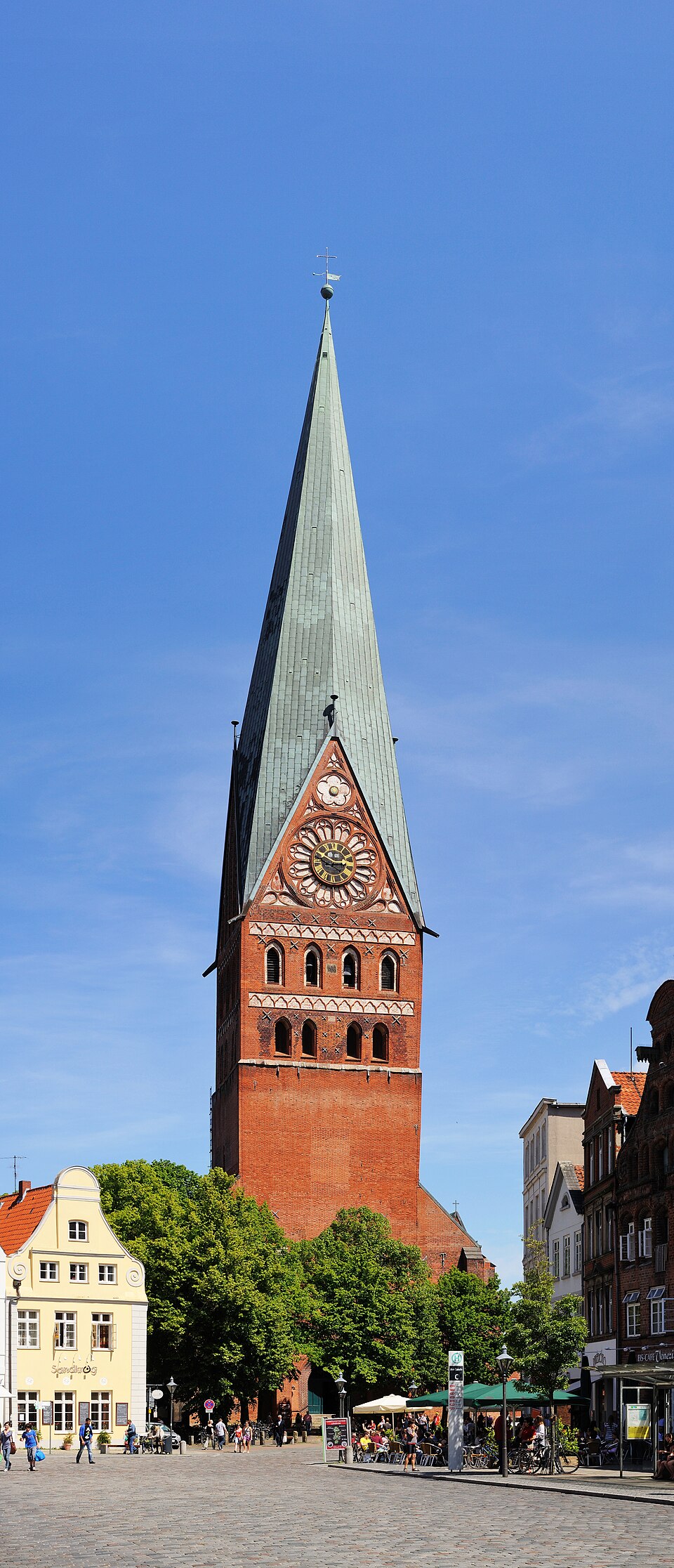
St John's Church (Johanniskirche), Lüneburg
St John's Church (Johanniskirche), Lüneburg, where Böhm was organist from 1698 until his death. No authentic portrait of Böhm is known. Photograph via Wikimedia Commons.

Georg Böhm is remembered above all for two things: he perfected the chorale partita, the set of keyboard variations on a Lutheran hymn, and he was — we can now say it with documents in hand — a formative teacher of the teenaged Johann Sebastian Bach. For thirty-five years he held the organ of St John’s (Johanniskirche) in Lüneburg, and it was in that town, and very probably in Böhm’s own house, that the most important composer of the age first learned the North German style at first hand. No portrait of Böhm survives; his church does.

He was born in Hohenkirchen, Thuringia, on 2 September 1661, the son of a schoolmaster and organist who gave him his first lessons until his death in 1675. Böhm was schooled at Goldbach and Gotha and entered the University of Jena in 1684. He surfaces next in Hamburg from 1693, in the orbit of the great North German organists, before being appointed in 1698 to succeed Christian Flor at the Johanniskirche in Lüneburg — the post he held until he died.


The chorale partita
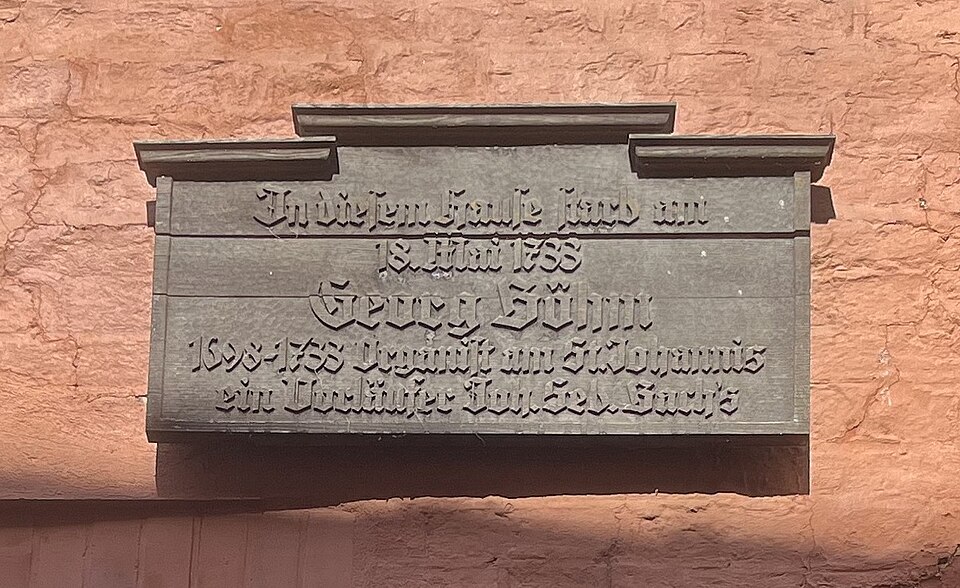
Georg Böhm commemorative plaque in Lüneburg
Commemorative plaque for Georg Böhm in Lüneburg. Photograph via Wikimedia Commons.

Böhm’s central contribution to keyboard music is the chorale partita — a chorale melody set as a series of variations, each clothing the tune in a new keyboard texture. He effectively made the genre his own, and his partitas on tunes such as Ach wie nichtig, ach wie flüchtig, Vater unser im Himmelreich and Wer nur den lieben Gott lässt walten are intimate, devotional pieces that treat the harpsichord or organ like a singer ornamenting a hymn line by line. Against this private vein stands his other manner: the free praeludia and fugues in the North German stylus phantasticus, all improvisatory flourish and dramatic contrast, and a set of harpsichord suites whose elegant ornamentation shows the clear imprint of the French clavecin tradition.


Böhm and the young Bach

The Böhm–Bach connection was for two centuries a matter of inference and rumour. C. P. E. Bach, writing about his father’s training in 1775, first set down that Böhm had been Bach’s teacher — and then corrected the note, softening it, so that scholars were left guessing. Then, in 2005, the musicologists Michael Maul and Peter Wollny discovered in Weimar a set of organ tablatures that turned out to be Bach’s earliest surviving autographs: copies, made in Lüneburg in 1700, of works by Reincken and Buxtehude. One bears a colophon in Bach’s own hand placing the copying “at the home of Mr Georg Böhm” — and the paper, analysis showed, was the same stock Böhm used for his own Lüneburg receipts.

There can no longer be any doubt that the organ at St John’s, and its organist Georg Böhm, were at least as important to the education of the young Bach as the Matins choir at St Michael’s.

— Peter Wollny and Michael Maul, “The Weimar Organ Tablature: Bach’s Earliest Autographs,” 2008

The discovery transformed a footnote into a fact: the boy Bach, a chorister at St Michael’s school in Lüneburg around 1700–1702, was learning the keyboard at Böhm’s elbow and on Böhm’s paper. It is very likely, the same scholars suggest, that Bach’s own early chorale partitas grew directly out of those lessons.


Legacy

The relationship did not end with Bach’s Lüneburg years. In 1727, by then Thomaskantor in Leipzig, Bach appointed his old master his sales agent in the north for the keyboard Partitas of the Clavier-Übung — a quiet sign of lasting respect across a quarter-century. Böhm died in Lüneburg on 18 May 1733, aged seventy-one. His own music, the intimate chorale partitas and the brilliant free works, holds an honourable place in the North German repertory; but his largest legacy is the one he could never have measured — the technique and the taste he handed to a teenager who would carry them further than anyone.

All works (27)

one row per PDF across every work · semicolon-delimited

Undated works follow in catalogue order.Filter these works →

CatalogTitleInstrumentation
Ach, wie nichtig, ach, wie flüchtig
Open individual scores (1)PDF on IMSLP ↗IMSLP work page ↗
1 PDF Spotify Apple Music
Allein Gott in der Höh sei Ehr
Open individual scores (1)PDF on IMSLP ↗IMSLP work page ↗
1 PDF Spotify Apple Music
Auf meinen lieben Gott
Open individual scores (1)PDF on IMSLP ↗IMSLP work page ↗
1 PDF Spotify Apple Music
Aus tiefer Not schrei ich zu dir
Open individual scores (1)PDF on IMSLP ↗IMSLP work page ↗
1 PDF Spotify Apple Music
Christ lag in Todesbanden, IGB 13
Open individual scores (1)PDF on IMSLP ↗IMSLP work page ↗
1 PDF Spotify Apple Music
Christ lag in Todesbanden, IGB 2
Open individual scores (1)PDF on IMSLP ↗IMSLP work page ↗
1 PDF Spotify Apple Music
Christe, der du bist Tag und Licht
Open individual scores (1)PDF on IMSLP ↗IMSLP work page ↗
1 PDF Spotify Apple Music
Christum wir sollen loben schon
Open individual scores (1)PDF on IMSLP ↗IMSLP work page ↗
1 PDF Spotify Apple Music
Complete Works for Organ and Harpsichord
Open individual scores (3)PDF on IMSLP ↗IMSLP work page ↗PDF on IMSLP ↗IMSLP work page ↗PDF on IMSLP ↗IMSLP work page ↗
3 PDFs Spotify Apple Music
Erhalt uns, Herr, bei deinem Wort
Open individual scores (1)PDF on IMSLP ↗IMSLP work page ↗
1 PDF Spotify Apple Music
Freu dich sehr, o meine Seele
Open individual scores (1)PDF on IMSLP ↗IMSLP work page ↗
1 PDF Spotify Apple Music
Gelobet seist du, Jesu Christ, IGB 15
Open individual scores (1)PDF on IMSLP ↗IMSLP work page ↗
1 PDF Spotify Apple Music
Gelobet seist du, Jesu Christ, IGB 26
Open individual scores (1)PDF on IMSLP ↗IMSLP work page ↗
1 PDF Spotify Apple Music
Herr Jesu Christ, dich zu uns wend
Open individual scores (1)PDF on IMSLP ↗IMSLP work page ↗
1 PDF Spotify Apple Music
Jesu, du bist allzu schöne
Open individual scores (1)PDF on IMSLP ↗IMSLP work page ↗
1 PDF Spotify Apple Music
Minuet in G major
Open individual scores (1)PDF on IMSLP ↗IMSLP work page ↗
1 PDF Spotify Apple Music
Nun bitten wir den Heiligen Geist
Open individual scores (1)PDF on IMSLP ↗IMSLP work page ↗
1 PDF Spotify Apple Music
Prelude in A minor
Open individual scores (1)PDF on IMSLP ↗IMSLP work page ↗
1 PDF Spotify Apple Music
Prelude in C major
Open individual scores (1)PDF on IMSLP ↗IMSLP work page ↗
1 PDF Spotify Apple Music
Prelude in D minor
Open individual scores (1)PDF on IMSLP ↗IMSLP work page ↗
1 PDF Spotify Apple Music
Suite No.8 in F minor
Open individual scores (1)PDF on IMSLP ↗IMSLP work page ↗
1 PDF Spotify Apple Music
Sämtliche Orgelwerke
Open individual scores (1)PDF on IMSLP ↗IMSLP work page ↗
1 PDF Spotify Apple Music
Vater unser im Himmelreich, IGB 22
Open individual scores (1)PDF on IMSLP ↗IMSLP work page ↗
1 PDF Spotify Apple Music
Vater unser im Himmelreich, IGB 23
Open individual scores (1)PDF on IMSLP ↗IMSLP work page ↗
1 PDF Spotify Apple Music
Vater unser im Himmelreich, IGB 24
Open individual scores (1)PDF on IMSLP ↗IMSLP work page ↗
1 PDF Spotify Apple Music
Vom Himmel hoch, da komm ich her
Open individual scores (1)PDF on IMSLP ↗IMSLP work page ↗
1 PDF Spotify Apple Music
Wer nur den lieben Gott läßt walten
Open individual scores (1)PDF on IMSLP ↗IMSLP work page ↗
1 PDF Spotify Apple Music